I Make My Own Film
Most photographs start with something bought. A roll, a card, a file. Mine start with a sheet of glass or blackened aluminum and a bottle of collodion I mixed myself.
There is no film in my studio. I make it one piece at a time when you arrive before I make your photograph.
What that actually means
Collodion is a syrupy solution — gun cotton dissolved in ether and alcohol, with salts added. I pour it onto a plate and tilt it until it flows corner to corner in one even coat. There is no machine for this, each plate is coated by hand.
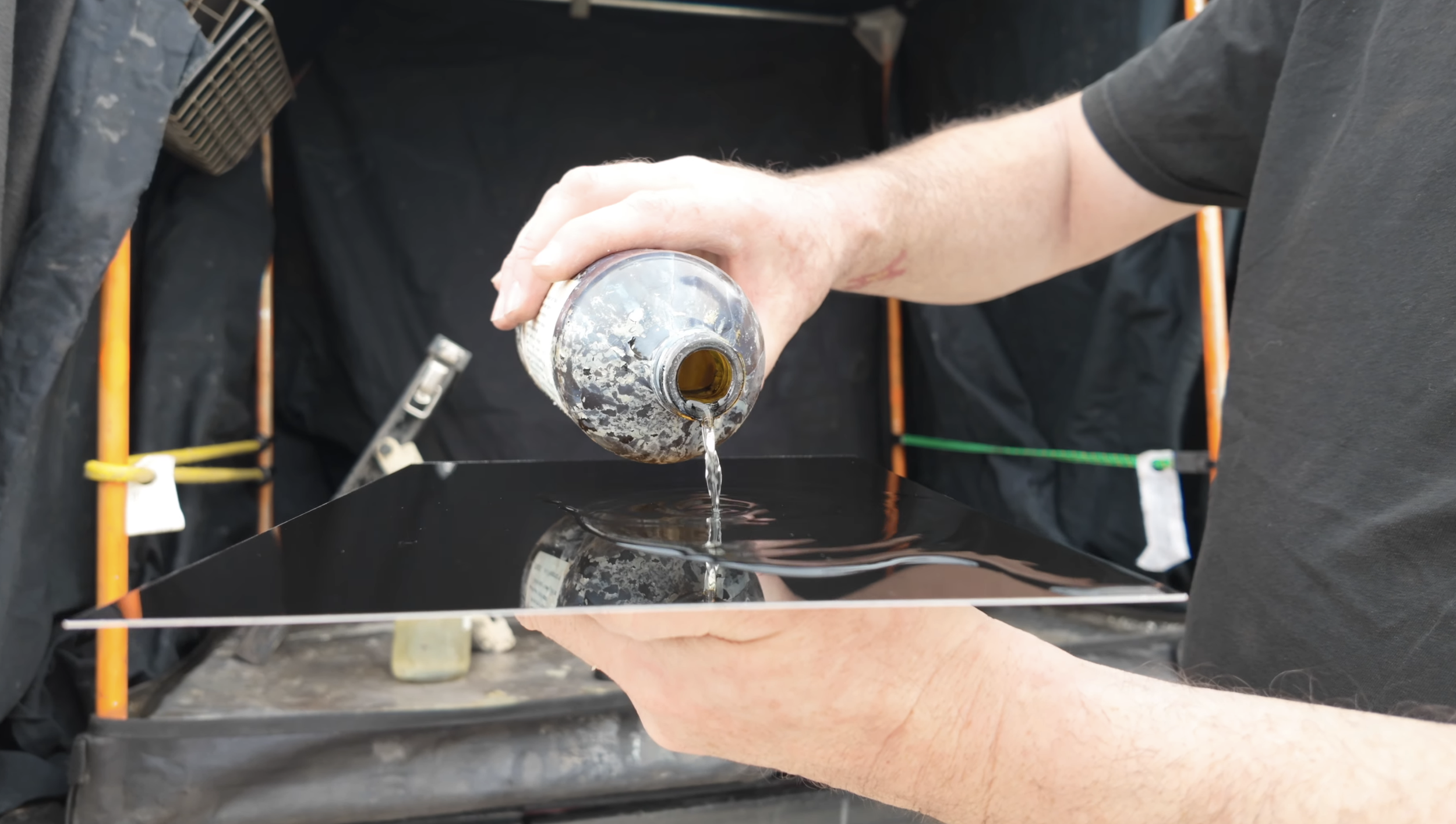
Pouring collodion prepping a Tintype
Then it goes into a bath of silver nitrate where the salts react and create silver halides. That is where it becomes sensitive to light right there in the dark, minutes before it goes in the camera. From that moment it is on a clock. The plate has to be exposed and developed while it is still wet, which is why the process is called wet plate collodion, and why my darkroom is never more than a few steps from my camera.
I expose it. I develop it in the darkroom by hand in a matter of seconds after which time I am able to share the part in the process known as fixing the image. We fix it together and the plate goes from a ghost to a photograph in front of your eyes. For me that part of the process never gets old.
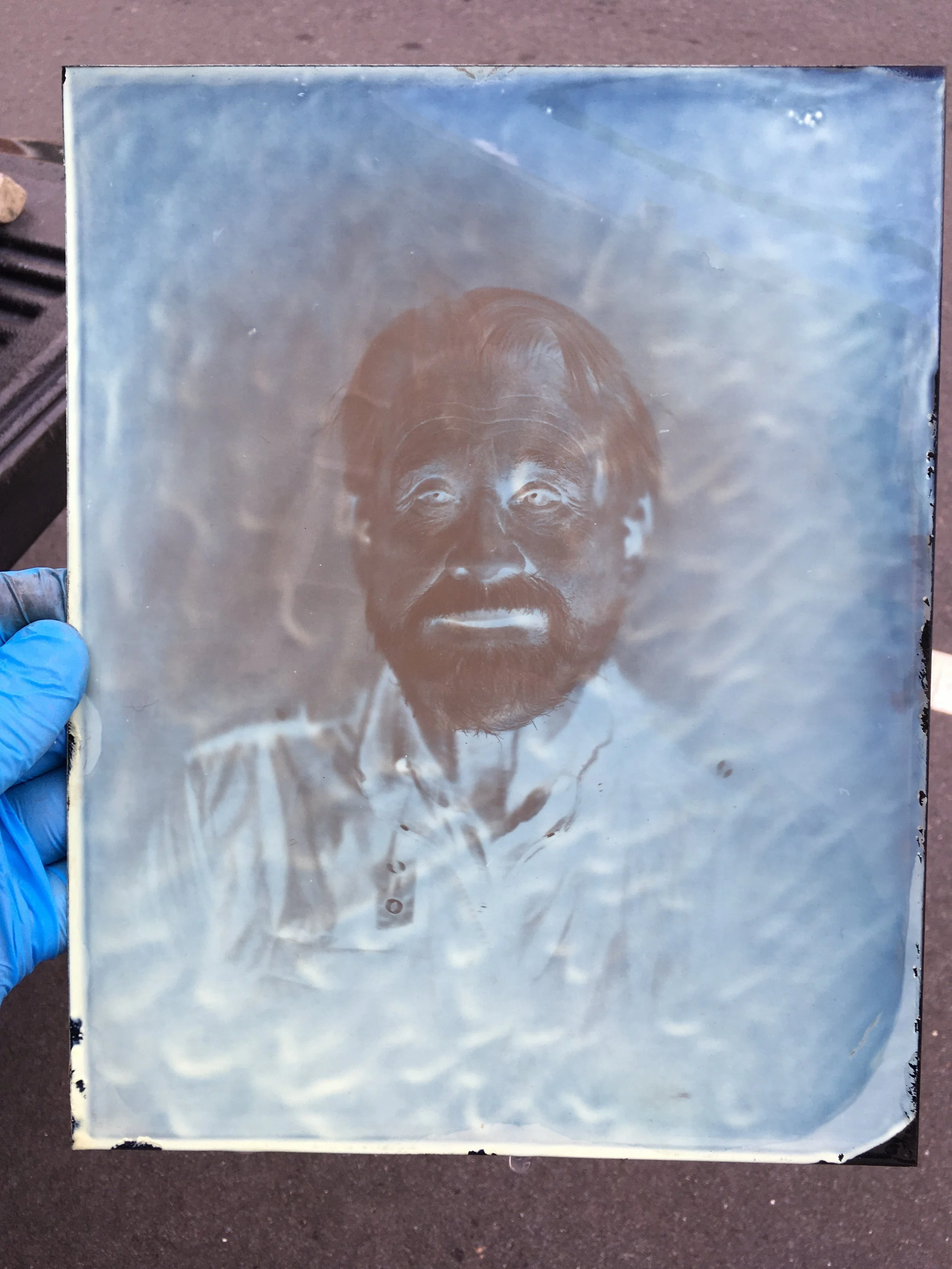
Tintype after development
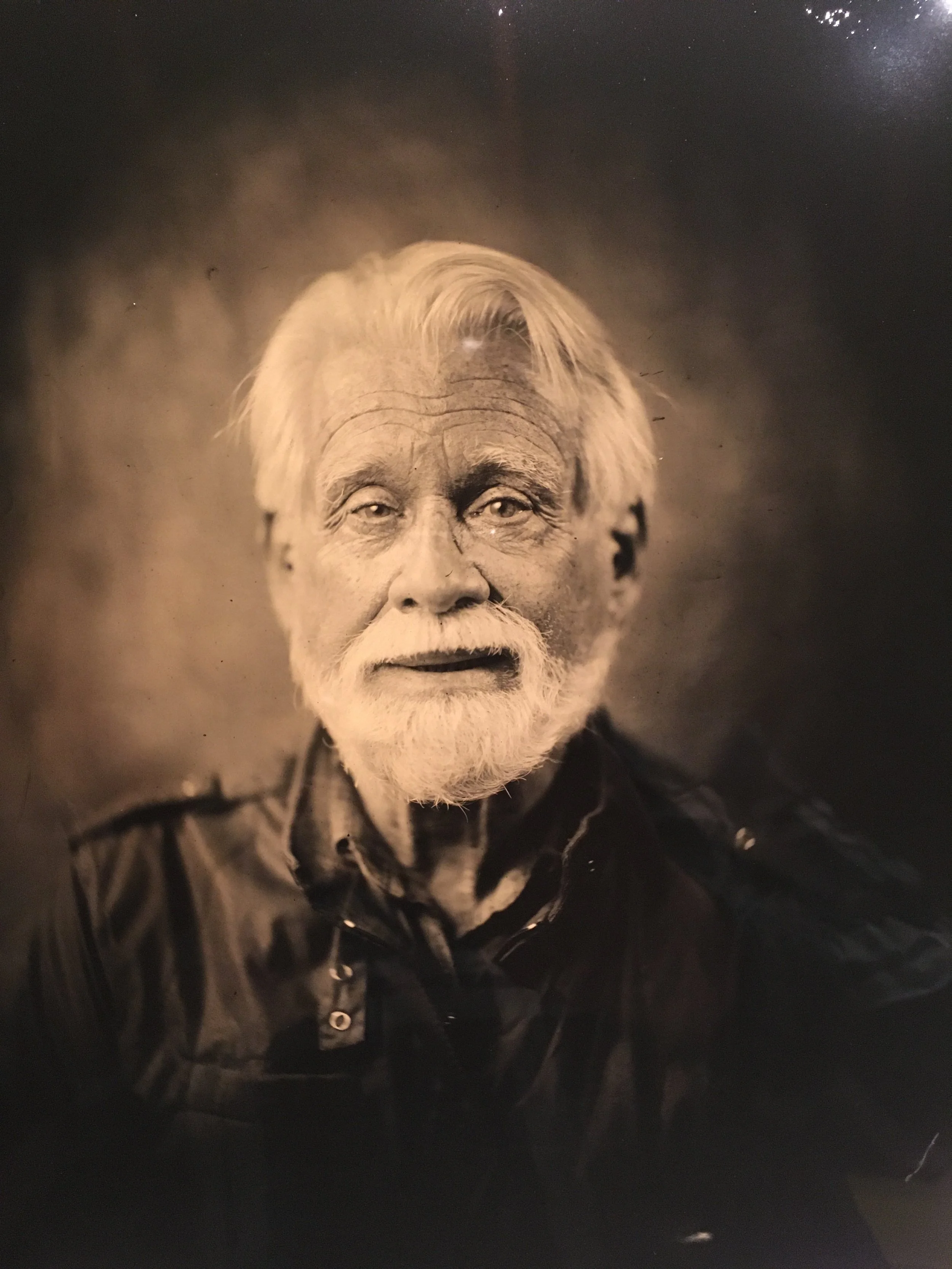
The Tintype revealed after fixing
Fixing a family portrait
Why bother?
Because the result is not a copy of anything.
A digital file is one of infinite identical versions made with a computer and light sensor. A real negative makes prints but a plate is the thing itself, the actual object that sat in the camera and took the light off your face. There is no original behind it. It is the original. Hold it and you are holding the only one.
It also looks like nothing else. Collodion is blind to red and hungry for blue. It translates the world out of color into a register of its own. Skin reads differently, eyes reflect in a deep way. Freckles and blue eyes come up in ways no filter has ever managed to fake, because it is not an effect. It is what the chemistry actually sees.
And it lasts. The image is metallic silver held in varnish, not dye on paper. Plates poured in the 1860s are sitting in collections right now looking the way they did the day they were made. Your inkjet print will not do that. Neither will your hard drive. This object will outlast the cloud.
Where the plates get made
Generally in a couple of places.
One is my studio in Lambertville, New Jersey, on the second floor of the People's Store on North Union Street. Antique cameras, a working darkroom, and a wall of plates.
The other is a darkroom I built into the bed of my truck. That one has been from Maine to California, parked in the desert Southwest, outside Spanish missions, on the edge of places where the nearest running water is forty miles off. Landscapes on collodion, made on site, coated and developed within arm's reach of the tripod.
Bookings
If you want to see it happen, that is the whole point of the thing. You sit, I pour, you watch your own face come up in a tray of developer under safelight. Twenty minutes, start to finish, and you leave holding the plate.
Sittings are by appointment at the studio in Lambertville. Bring what you want to be photographed with — the jacket, the instrument, the dog, the tattoo. It all ends up in the silver.
Made by hand, not just taken.

