 Image 1 of 1
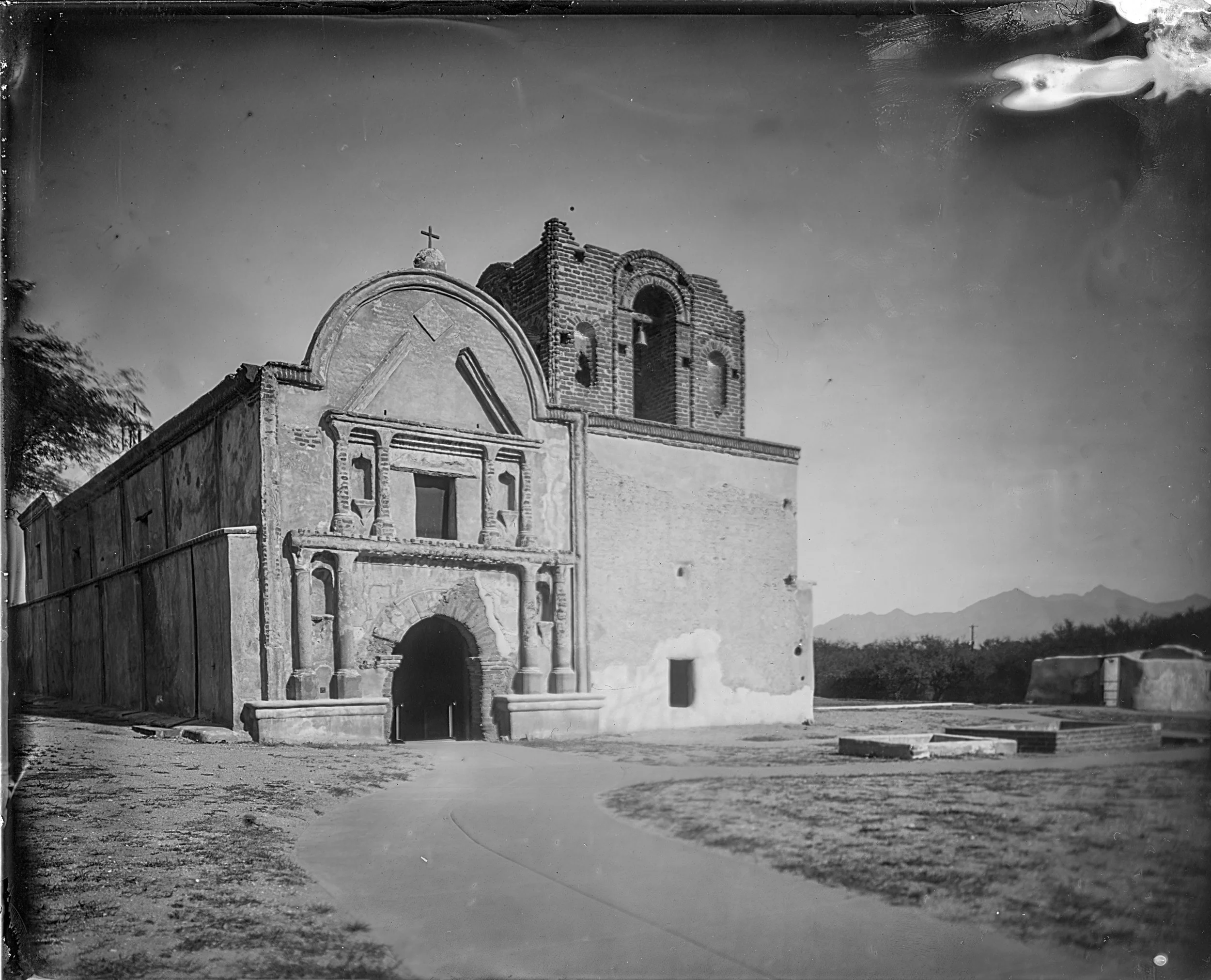
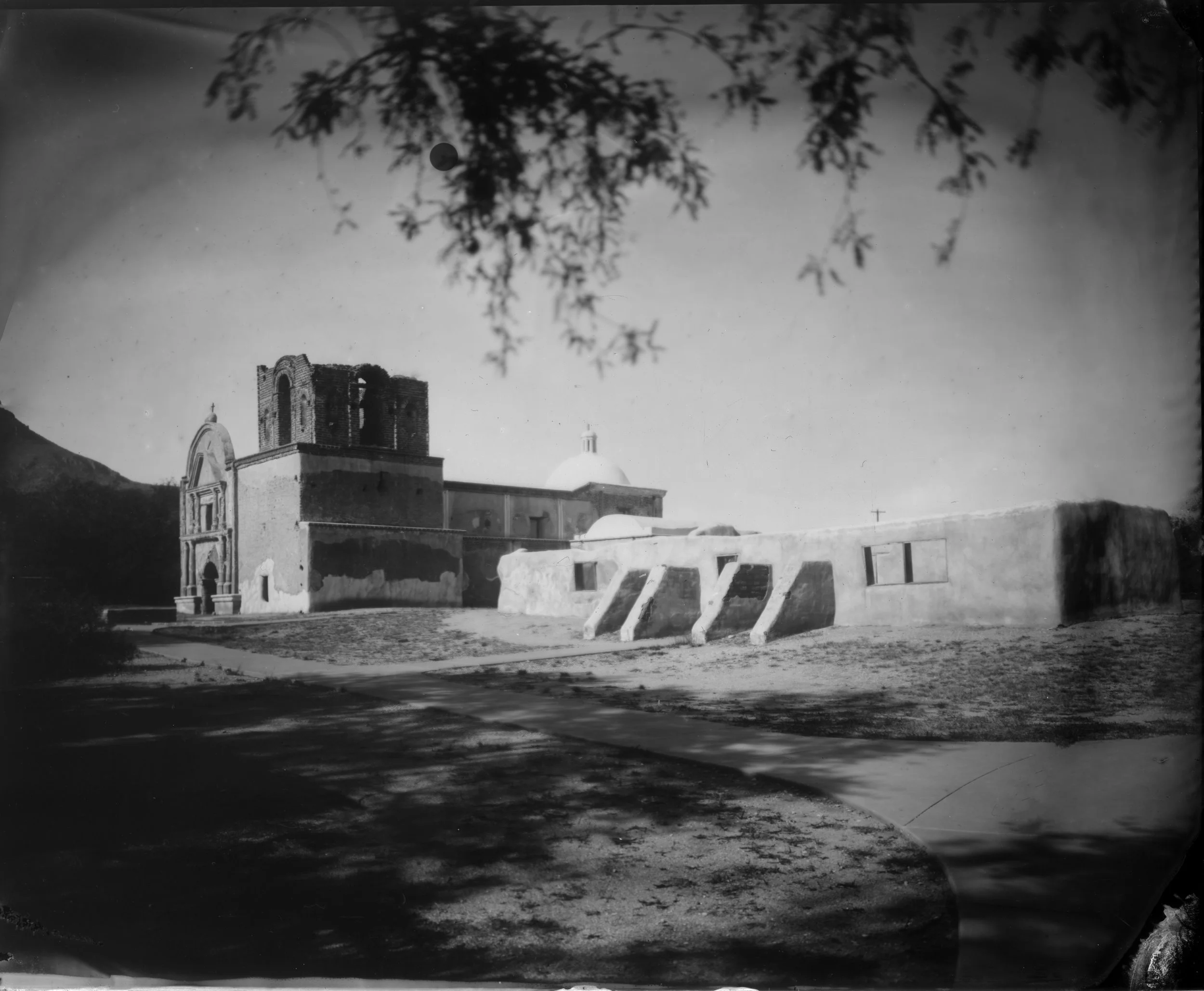
A limited two part series of large-format studies documenting the collapse of Mission Tumacácori in Southern Arizona. These prints are the result of a 19th-century chemical revival—using dry plate collodion on hand-poured glass.
Tumacácori—stands as a record of the frontier's toll. Built by the same hands but broken by Apache raids, disease, and the winter of 1848, these ruins are all that remain of a community that surrendered to the desert.
I’ve fixed the erosion of these 200-year-old adobe walls to glass using silver and light. Each print captures the raw, orthochromatic texture of the Sonoran Desert that digital sensors cannot replicate.
Tumacácori II: The Adobe Ruins
This plate focuses on the physical reality of the mission’s collapse. It highlights the massive, six-foot-thick adobe walls and the crumbling outbuildings that were once the heart of a thriving community. The dry plate chemistry emphasizes the "tooth" and grit of the hand-packed earth, capturing the exact moment where the desert began to reclaim the structure.
By 1848, the combination of Apache raids, disease, and starvation broke the community that lived here. They carried their holy statues to San Xavier and left these walls to the desert.
The Process: Shot on hand-poured glass using the dry plate collodion process.
The History: Documents the areas of the mission that fell first after the 1848 abandonment.
Print Details: Archival Giclée print.
The image was created as an 8×10 handmade dry plate, exposed in a large-format camera on location using dry plate collodion process. Unlike digital files, this plate is a physical original—light, chemistry, and time fixed onto glass. No screen. No power. No duplication.
This print is the result of a single committed exposure, made slowly and deliberately in the field.
Nothing is forever. But some things get close.
Part II of a two part study of Tumacacori
Please visit my YouTube Channel to find out more about the making of this image in the episode:
A limited two part series of large-format studies documenting the collapse of Mission Tumacácori in Southern Arizona. These prints are the result of a 19th-century chemical revival—using dry plate collodion on hand-poured glass.
Tumacácori—stands as a record of the frontier's toll. Built by the same hands but broken by Apache raids, disease, and the winter of 1848, these ruins are all that remain of a community that surrendered to the desert.
I’ve fixed the erosion of these 200-year-old adobe walls to glass using silver and light. Each print captures the raw, orthochromatic texture of the Sonoran Desert that digital sensors cannot replicate.
Tumacácori II: The Adobe Ruins
This plate focuses on the physical reality of the mission’s collapse. It highlights the massive, six-foot-thick adobe walls and the crumbling outbuildings that were once the heart of a thriving community. The dry plate chemistry emphasizes the "tooth" and grit of the hand-packed earth, capturing the exact moment where the desert began to reclaim the structure.
By 1848, the combination of Apache raids, disease, and starvation broke the community that lived here. They carried their holy statues to San Xavier and left these walls to the desert.
The Process: Shot on hand-poured glass using the dry plate collodion process.
The History: Documents the areas of the mission that fell first after the 1848 abandonment.
Print Details: Archival Giclée print.
The image was created as an 8×10 handmade dry plate, exposed in a large-format camera on location using dry plate collodion process. Unlike digital files, this plate is a physical original—light, chemistry, and time fixed onto glass. No screen. No power. No duplication.
This print is the result of a single committed exposure, made slowly and deliberately in the field.
Nothing is forever. But some things get close.
Part II of a two part study of Tumacacori
Please visit my YouTube Channel to find out more about the making of this image in the episode: