 Image 1 of 1
A limited two part series of large-format studies documenting the collapse of Mission Tumacácori in Southern Arizona. These prints are the result of a 19th-century chemical revival—using dry plate collodion on hand-poured glass.
Tumacácori—stands as a record of the frontier's toll. Built by the same hands but broken by Apache raids, disease, and the winter of 1848, these ruins are all that remain of a community that surrendered to the desert.
I’ve fixed the erosion of these 200-year-old adobe walls to glass using silver and light. Each print captures the raw, orthochromatic texture of the Sonoran Desert that digital sensors cannot replicate.
Tumacácori I: The Facade
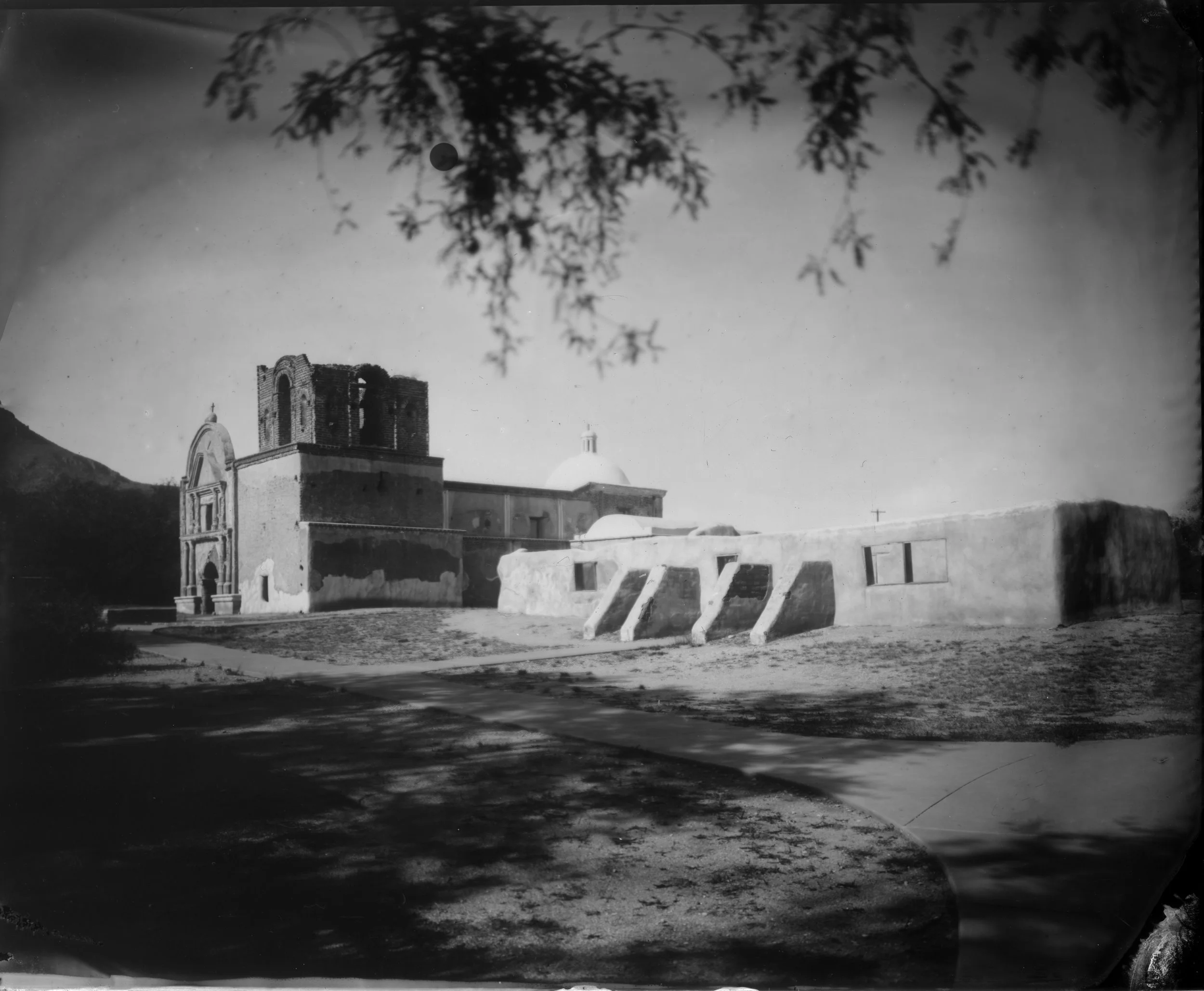
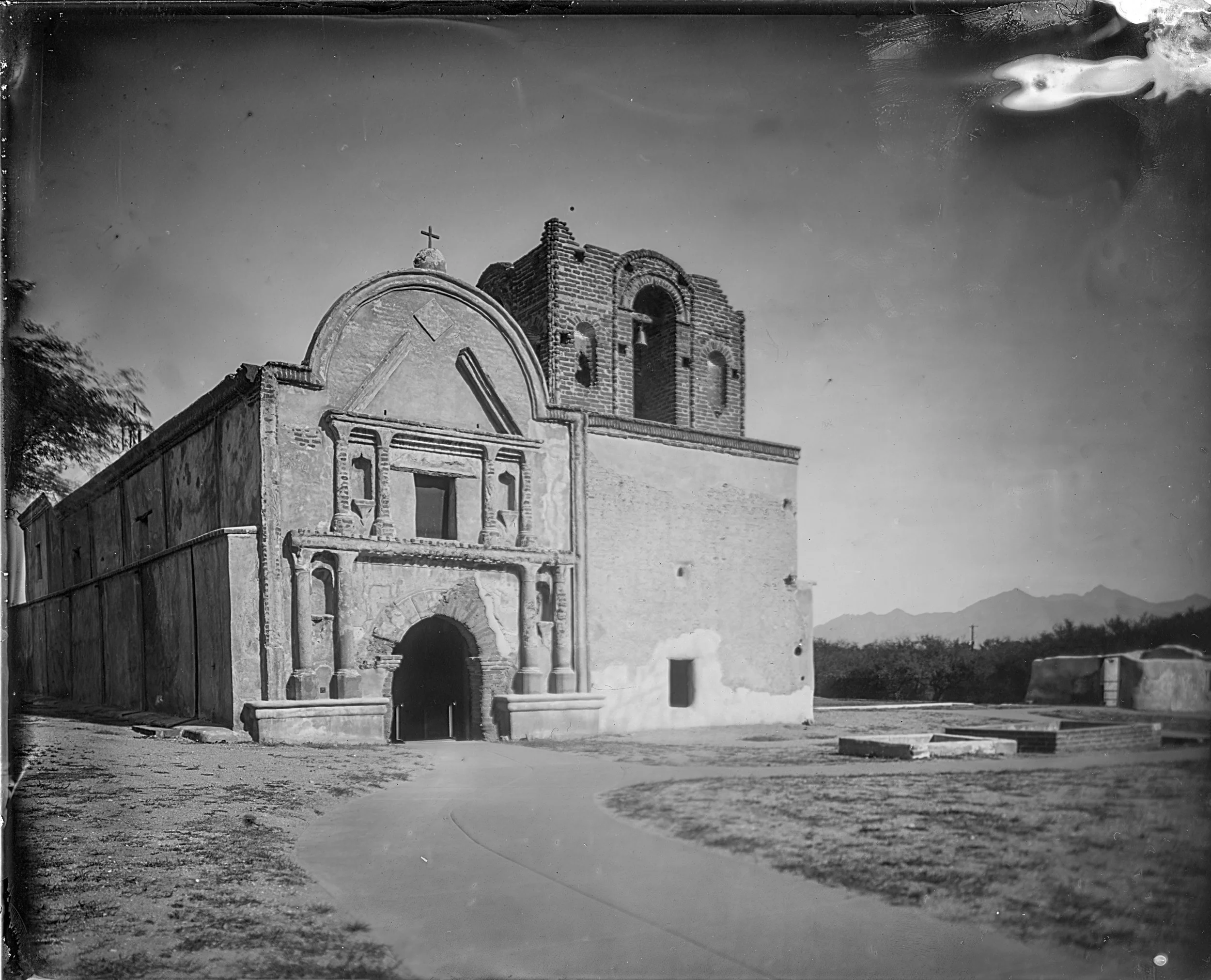
A study in defiant ambition. This plate captures the grand entrance of the church, an architectural twin to San Xavier del Bac. Through the silver-heavy grain of the dry plate process, the unfinished tower and sun-bleached adobe are rendered with a stark, skeletal clarity.
The Process: Shot on hand-poured glass using the dry plate collodion process.
The History: This facade stood as the final edge of the Spanish frontier, eventually abandoned during the Apache conflicts of the mid-19th century.
Print Details: Archival Giclée print.
The image was created as an 8×10 handmade dry plate, exposed in a large-format camera on location using dry plate collodion process. Unlike digital files, this plate is a physical original—light, chemistry, and time fixed onto glass. No screen. No power. No duplication.
This print is the result of a single committed exposure, made slowly and deliberately in the field.
Nothing is forever. But some things get close.
Part I of a two part study of Tumacacori
Please visit my YouTube Channel to find out more about the making of this image in the episode:
A limited two part series of large-format studies documenting the collapse of Mission Tumacácori in Southern Arizona. These prints are the result of a 19th-century chemical revival—using dry plate collodion on hand-poured glass.
Tumacácori—stands as a record of the frontier's toll. Built by the same hands but broken by Apache raids, disease, and the winter of 1848, these ruins are all that remain of a community that surrendered to the desert.
I’ve fixed the erosion of these 200-year-old adobe walls to glass using silver and light. Each print captures the raw, orthochromatic texture of the Sonoran Desert that digital sensors cannot replicate.
Tumacácori I: The Facade
A study in defiant ambition. This plate captures the grand entrance of the church, an architectural twin to San Xavier del Bac. Through the silver-heavy grain of the dry plate process, the unfinished tower and sun-bleached adobe are rendered with a stark, skeletal clarity.
The Process: Shot on hand-poured glass using the dry plate collodion process.
The History: This facade stood as the final edge of the Spanish frontier, eventually abandoned during the Apache conflicts of the mid-19th century.
Print Details: Archival Giclée print.
The image was created as an 8×10 handmade dry plate, exposed in a large-format camera on location using dry plate collodion process. Unlike digital files, this plate is a physical original—light, chemistry, and time fixed onto glass. No screen. No power. No duplication.
This print is the result of a single committed exposure, made slowly and deliberately in the field.
Nothing is forever. But some things get close.
Part I of a two part study of Tumacacori
Please visit my YouTube Channel to find out more about the making of this image in the episode: