 Image 1 of 1
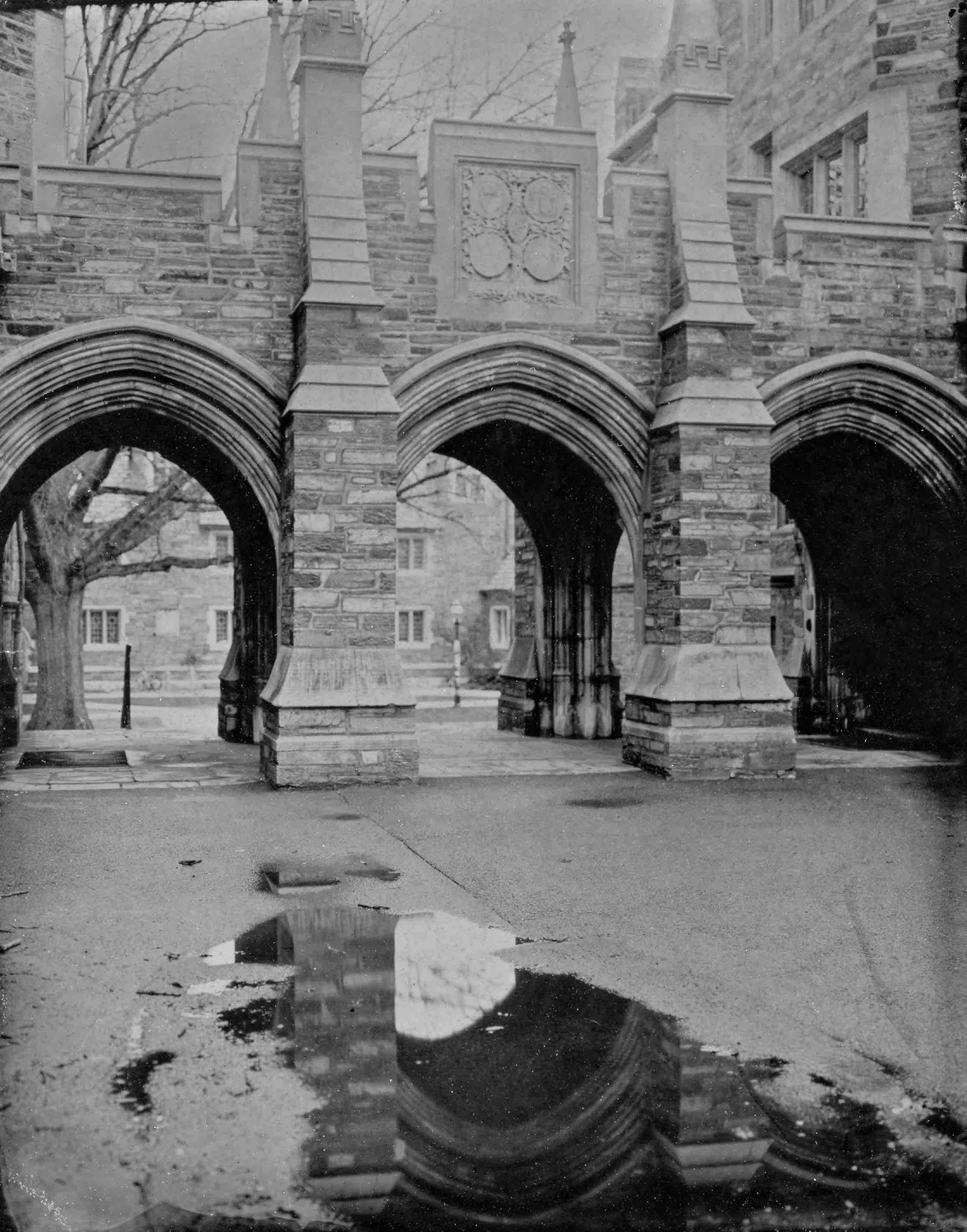
Three Gothic stone arches open onto a courtyard at Princeton University, their carved architectural details reflected in a shallow puddle left behind by the rain. The photograph captures both the solidity of the historic architecture and its temporary reflection on the wet paving, creating two versions of the same scene within a single composition.
Above the central arch sits a carved shield, while each of the three openings frames a slightly different view of the courtyard beyond. The repeated arches establish a strong architectural rhythm, their symmetrical forms contrasting with the irregular surface of the water below. The reflection introduces a second perspective, turning the familiar stonework upside down and giving the composition an unexpected sense of depth.
Princeton University's Gothic architecture offers an interesting subject for historic photographic techniques. The carved stone, deep archways, and carefully proportioned openings have the kind of texture and detail that nineteenth-century photography was particularly well suited to recording. Here, the rain has introduced an additional element, temporarily transforming the paving into a reflective surface.
I positioned the camera to include both the architectural structure and its reflection, allowing the puddle to become an essential part of the photograph rather than simply an incidental detail. The resulting image brings together the permanence of the stone building and the fleeting appearance of its reflection. On a dry day, the same location would produce an entirely different photograph.
This image was made using the historic wet plate collodion photographic process, introduced in 1851. The technique requires preparing a photographic plate by hand, coating it with collodion, sensitizing it in silver nitrate, exposing it in a large-format camera, and developing the image while the plate remains wet.
The plate was coated, exposed, and developed entirely on location at Princeton University, using a portable darkroom built into the back of a truck. Every stage of the process had to be completed within minutes, requiring careful preparation and deliberate composition before the exposure was made.
Wet plate collodion photography produces a distinctive tonal range, fine architectural detail, and subtle variations that are characteristic of the original photographic process. These qualities are preserved in the finished image rather than removed through extensive digital manipulation.
The original photograph has been reproduced as an archival fine art giclée print, retaining the detail, atmosphere, and tonal character of the original plate.
Available in multiple sizes, from a smaller print for a collection to a larger statement piece.
Location: Princeton University, Princeton, New Jersey
Original Photographic Process: Wet Plate Collodion
Print Process: Archival Giclée
Available Sizes: Multiple sizes
Architecture built to look centuries old, photographed with a process that genuinely is.