 Image 1 of 2
 Image 2 of 2
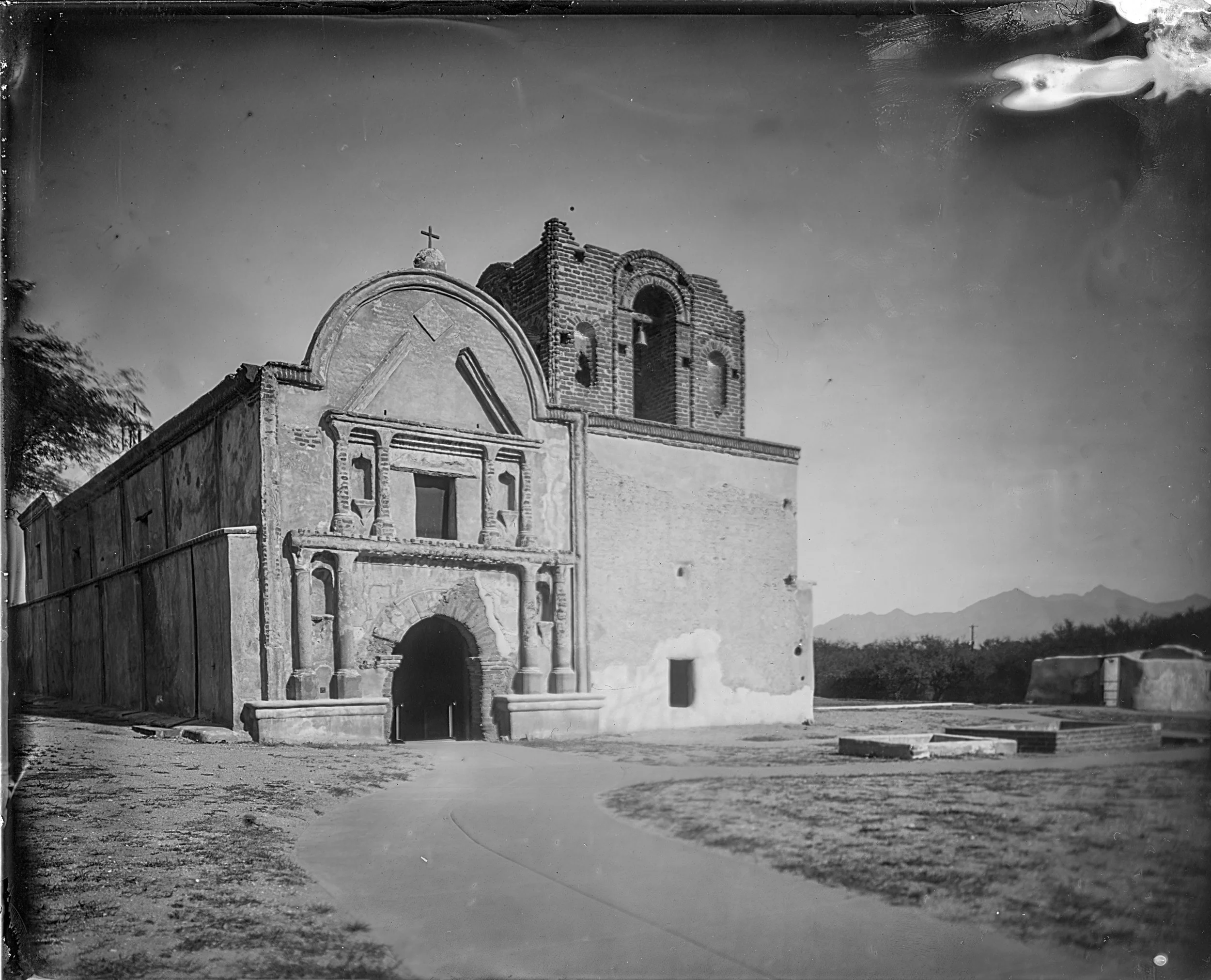
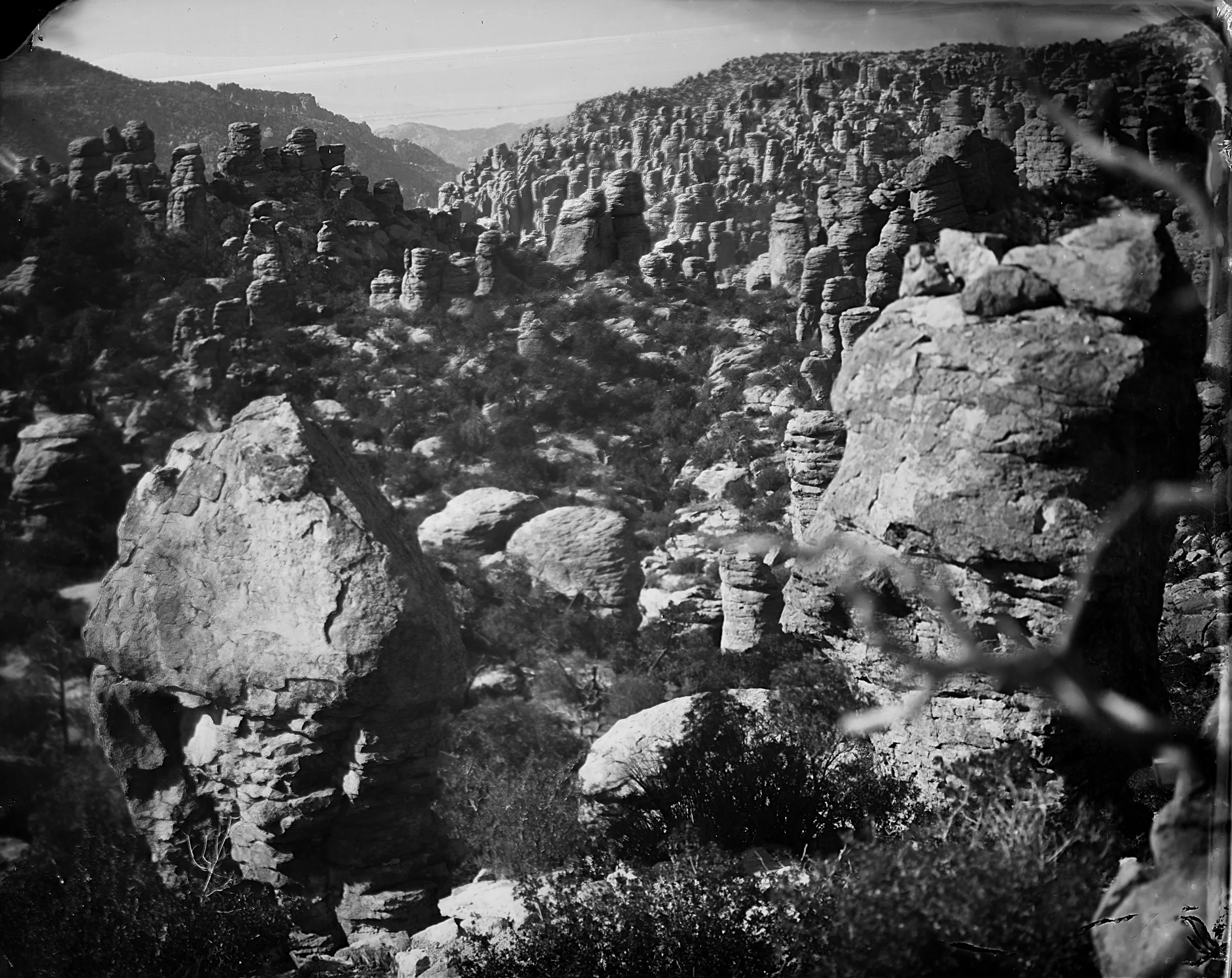
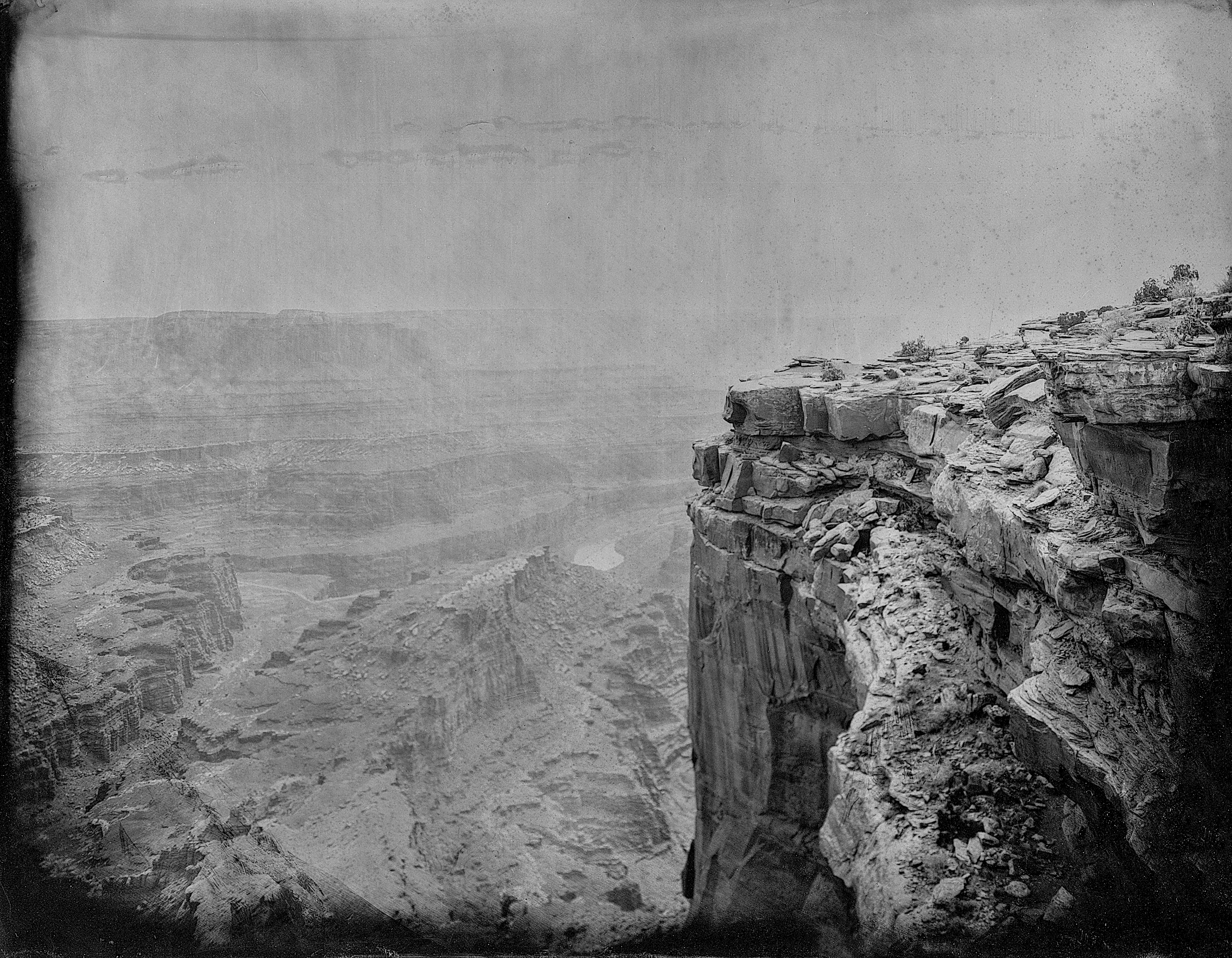
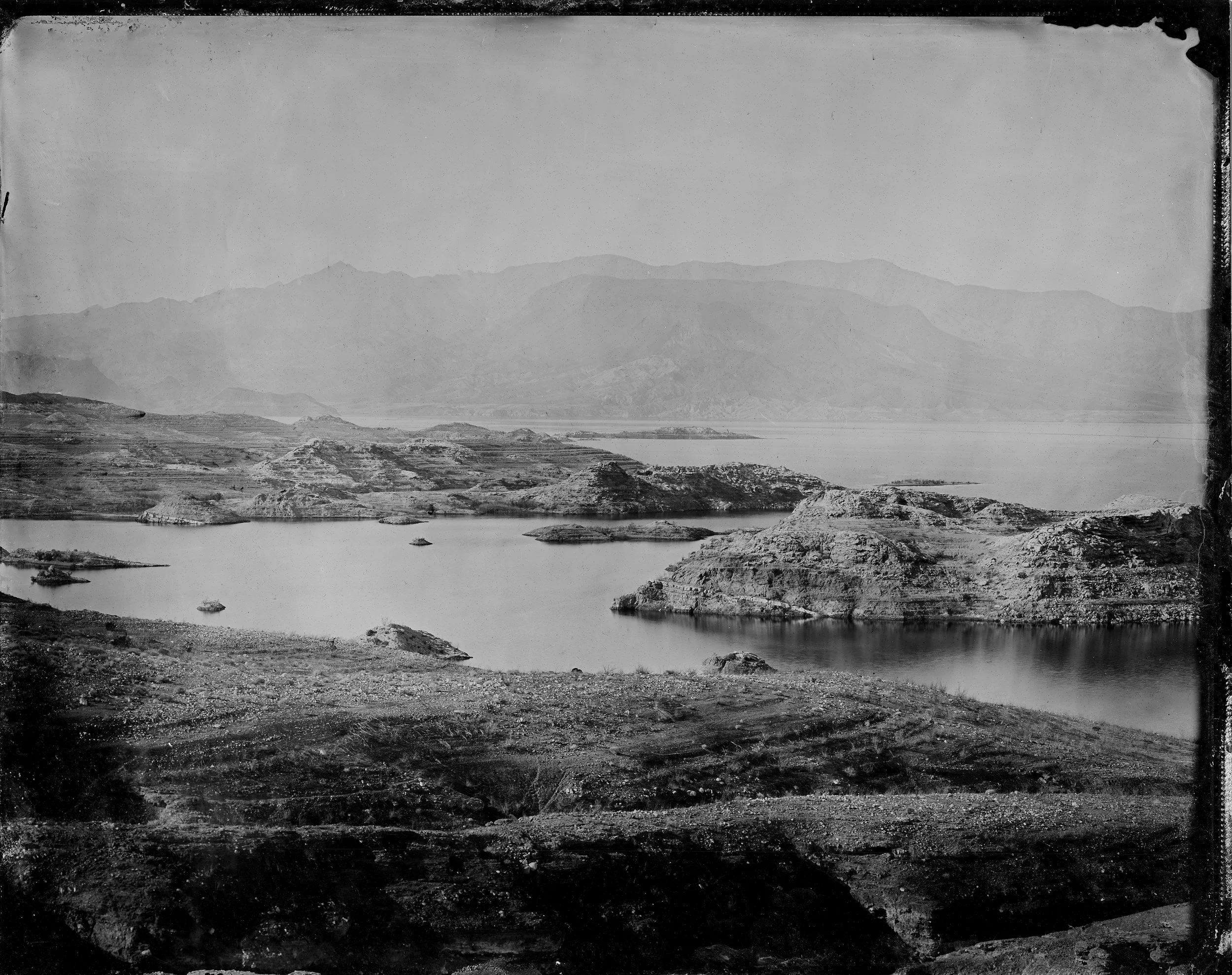
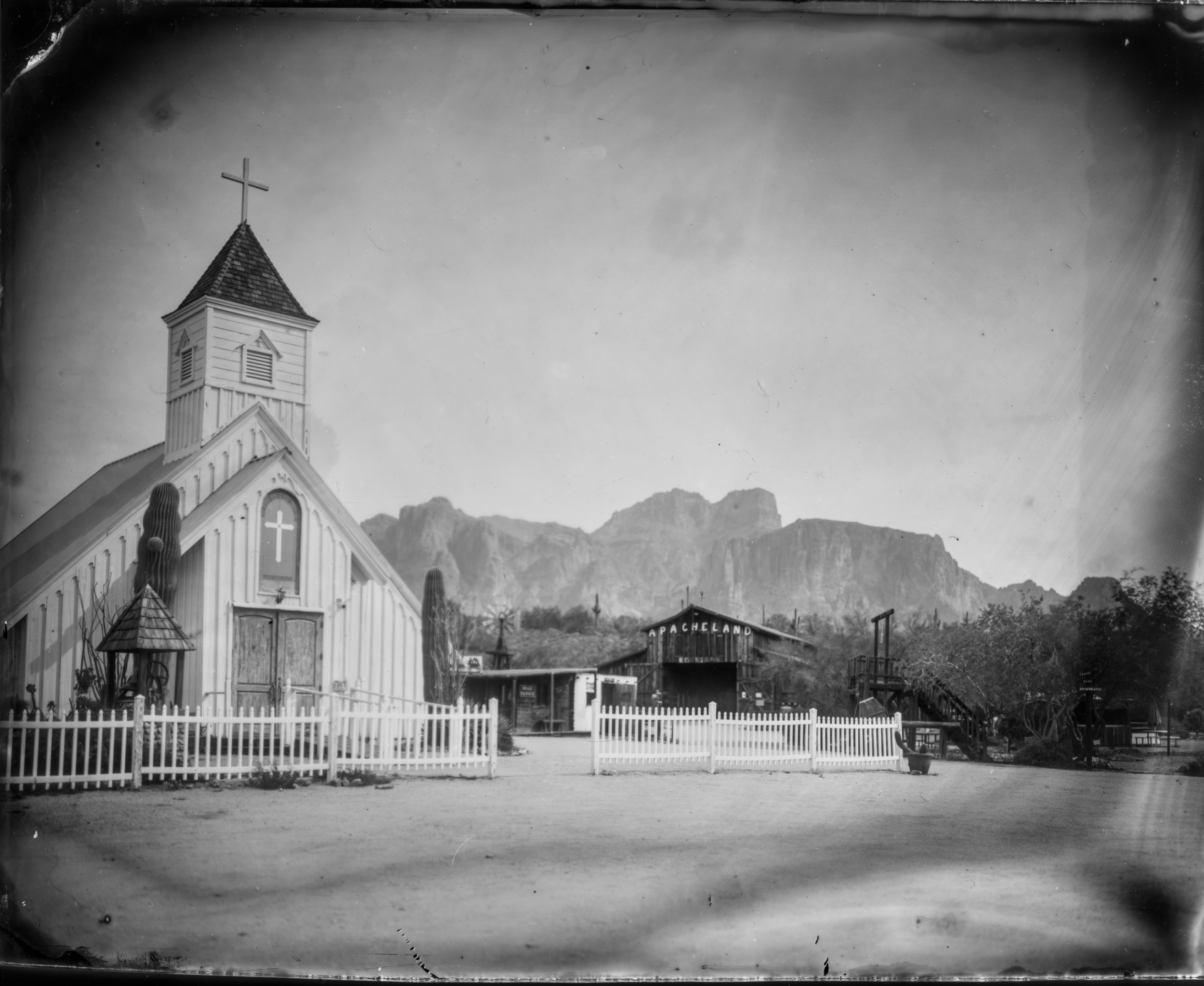
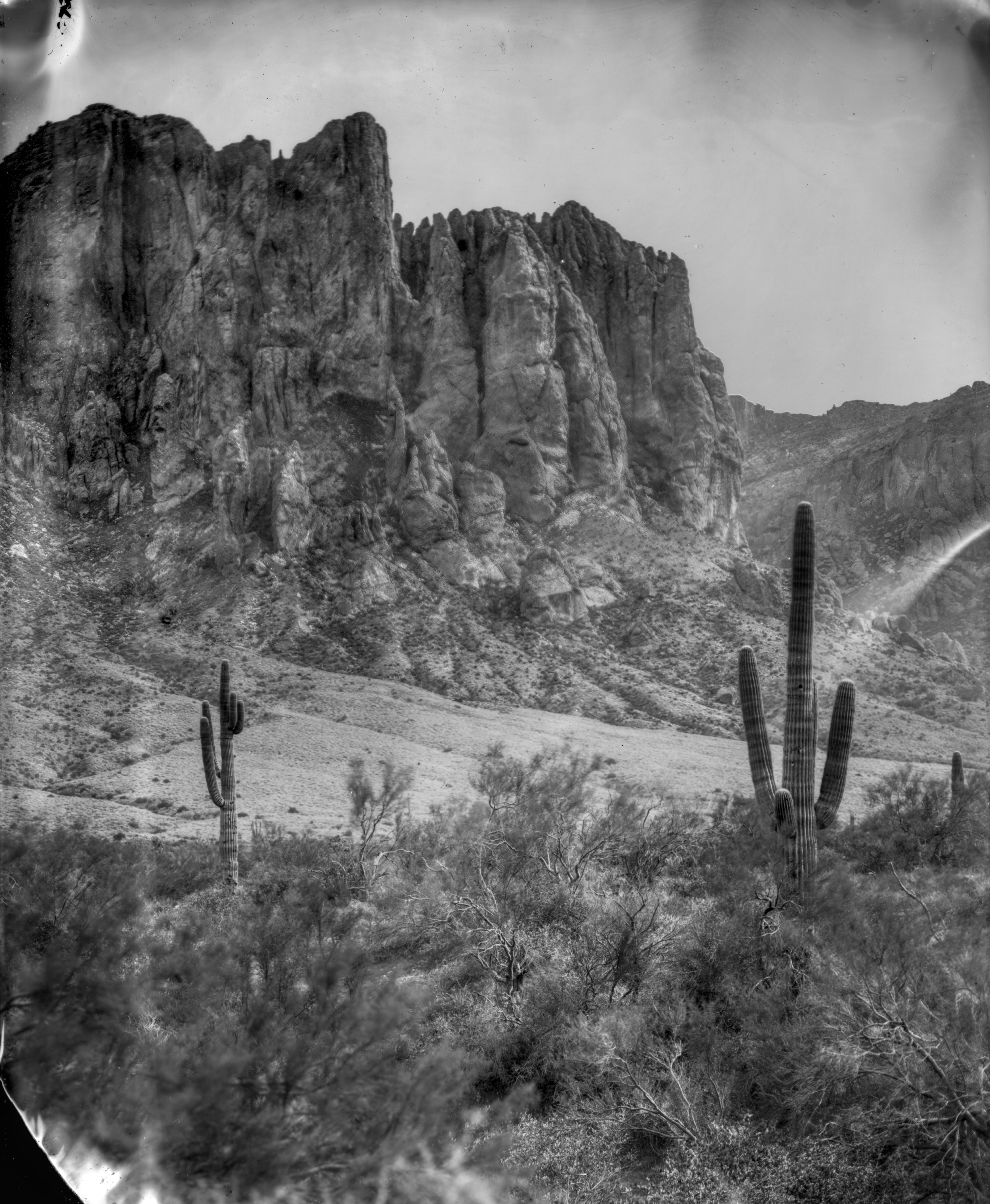
This photograph was made using the historic dry plate photographic process, a silver-based technique that predates modern film and digital photography. Dry plates require careful preparation and a single exposure, encouraging a slower, more deliberate engagement with the landscape — one that makes no promises about what the chemistry will find.
The Superstition Mountains rise abruptly from the Sonoran Desert east of Phoenix, a volcanic mass of tuff and rhyolite that has accumulated legend as steadily as erosion. The Apache called this the Devil's Playground and believed a Thunder God lived within, protecting what was hidden there. The Spanish named it Monte Superstition and declined to return. Over 600 people are estimated to have died searching for the Lost Dutchman Mine within these canyons — some to the desert, some to each other, some to causes that were never determined. In 1891, Jacob Waltz died in Phoenix with one last clue: "The setting sun shines into the entrance of the mine and glitters on the gold." The mine has never been found.
This plate was exposed in the afternoon, the light coming from the west. When it was developed in the dark tent a light stream appeared on the right side of the frame — arcing across the image toward the canyon mouth, uninvited. It was not placed there. It is not a flaw. The dry plate process is photochemically honest — it records what the light does, nothing more and nothing less. Make of it what you will.
Part of the NomadType Southwest series, this work explores American landscapes through historic photographic methods, using 19th-century processes to reflect on impermanence, myth, and the enduring weight of place.
Please visit my YouTube Channel to find out more about the making of this image in the episode:
This photograph was made using the historic dry plate photographic process, a silver-based technique that predates modern film and digital photography. Dry plates require careful preparation and a single exposure, encouraging a slower, more deliberate engagement with the landscape — one that makes no promises about what the chemistry will find.
The Superstition Mountains rise abruptly from the Sonoran Desert east of Phoenix, a volcanic mass of tuff and rhyolite that has accumulated legend as steadily as erosion. The Apache called this the Devil's Playground and believed a Thunder God lived within, protecting what was hidden there. The Spanish named it Monte Superstition and declined to return. Over 600 people are estimated to have died searching for the Lost Dutchman Mine within these canyons — some to the desert, some to each other, some to causes that were never determined. In 1891, Jacob Waltz died in Phoenix with one last clue: "The setting sun shines into the entrance of the mine and glitters on the gold." The mine has never been found.
This plate was exposed in the afternoon, the light coming from the west. When it was developed in the dark tent a light stream appeared on the right side of the frame — arcing across the image toward the canyon mouth, uninvited. It was not placed there. It is not a flaw. The dry plate process is photochemically honest — it records what the light does, nothing more and nothing less. Make of it what you will.
Part of the NomadType Southwest series, this work explores American landscapes through historic photographic methods, using 19th-century processes to reflect on impermanence, myth, and the enduring weight of place.
Please visit my YouTube Channel to find out more about the making of this image in the episode: