 Image 1 of 1
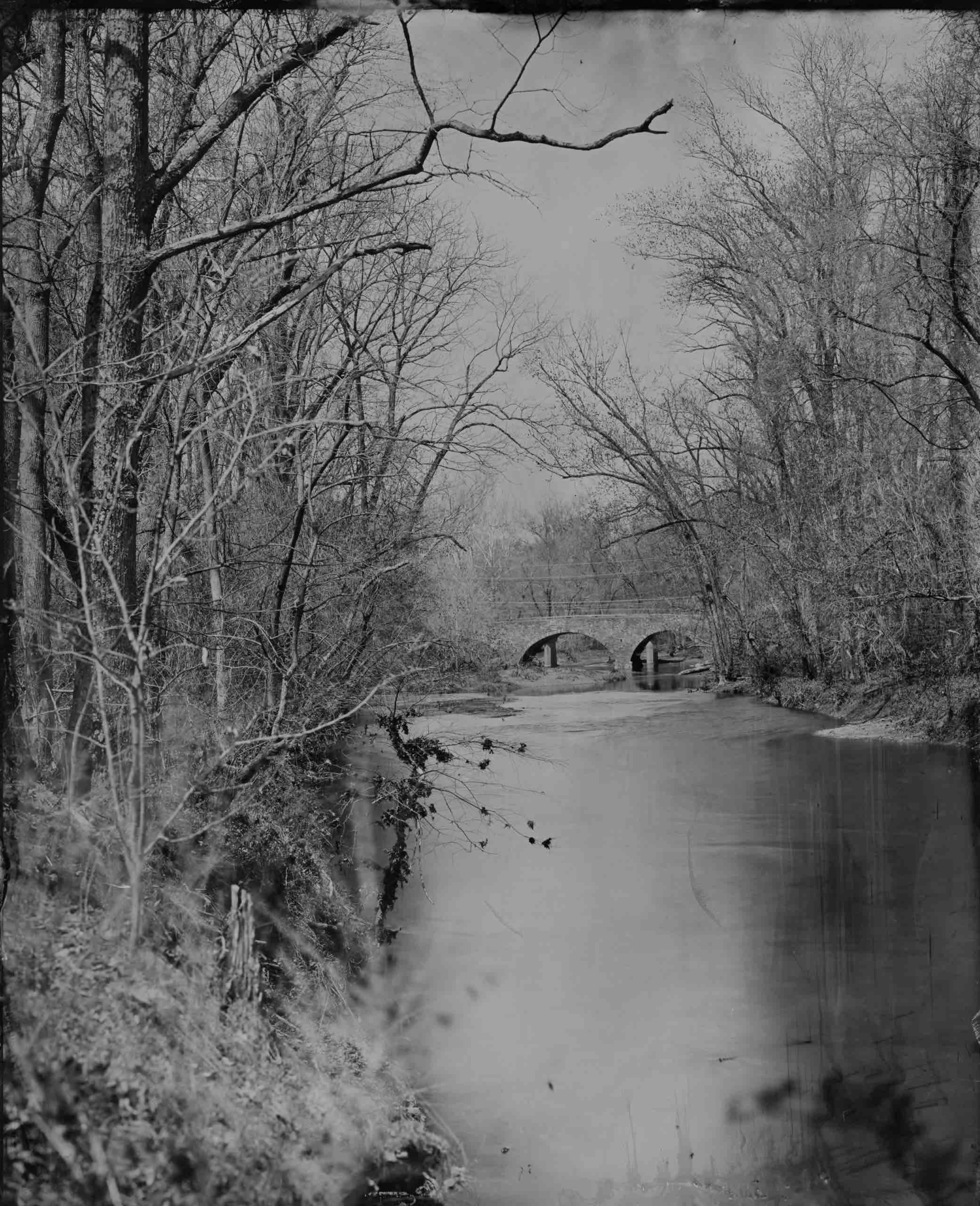
A historic stone arch bridge seen from downstream, with bare trees closing in over the water and the surrounding woodland framing the structure. Located in Mercer County, New Jersey, Quaker Bridge is a reminder of the older roads and crossings that once connected communities long before modern highways transformed the landscape.
The bridge stands where an old road crossed the creek, its stone arches carrying traffic since before the road was paved. Built from individual blocks of stone, the structure reflects a period when bridges were constructed using traditional masonry techniques, relying on the strength and geometry of the arch to support the roadway above.
The photograph was composed from a low position on the creek bank, looking upstream toward the crossing. Rather than making the bridge dominate the image, I deliberately allowed the surrounding woodland to occupy much of the frame. The bare branches of the trees create a dense pattern against the sky, while the creek leads the eye toward the stone arches in the distance.
Without their leaves, the trees reveal the underlying structure of the landscape. Their branches reach across the water, creating an intricate network of lines that contrasts with the solid, carefully arranged masonry of the bridge. The composition brings together two very different kinds of structure: one created by nature over time, the other constructed by human hands.
This photograph was made using the nineteenth-century wet plate collodion process, introduced in 1851. The technique requires preparing a photographic plate by hand, coating it with collodion, sensitizing it in a silver nitrate bath, exposing it in a large-format camera, and developing it while the chemistry remains wet.
The plate was coated, exposed, and developed entirely on location, using a portable darkroom built into the back of a truck. Every stage of the process had to be completed within minutes, requiring careful preparation before making the exposure.
The long exposure softened the movement of the creek, giving the water a smooth, almost continuous surface, while the stationary branches remained sharply defined against the sky. The resulting image retains the distinctive tonal range, fine detail, and subtle imperfections associated with historic wet plate photography.
The original plate has been reproduced as an archival fine art giclée print, preserving the atmosphere and character of the nineteenth-century photographic process.
Available in multiple sizes, from a smaller print for a collection to a larger statement piece.
Location: Quaker Bridge, Mercer County, New Jersey
Original Photographic Process: Wet Plate Collodion
Print Process: Archival Giclée
Available Sizes: Multiple sizes
A crossing older than the road it carries, photographed with a process from the same century.