 Image 1 of 1
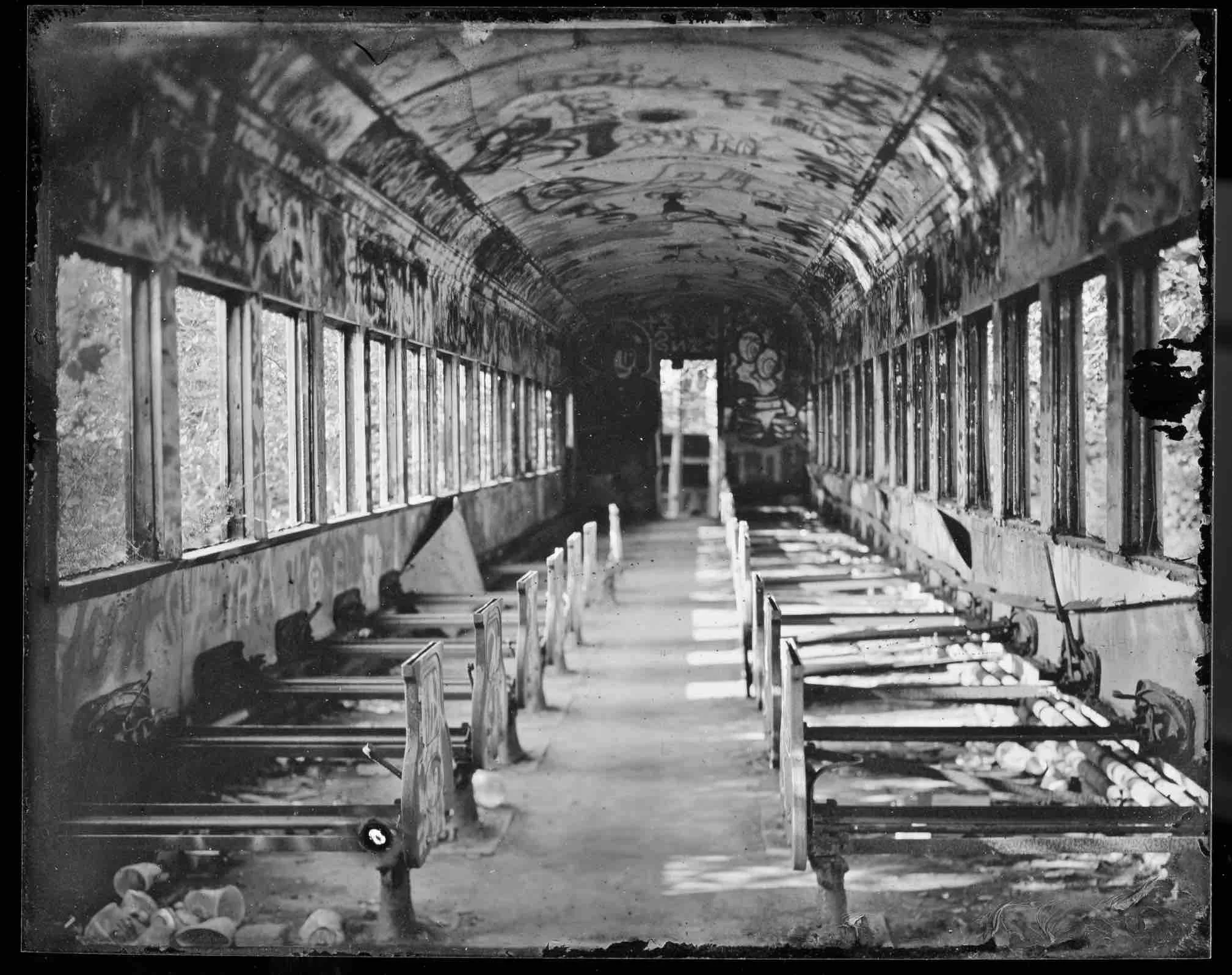
Inside an abandoned railway passenger car, the seats have been stripped to their metal frames, the windows are exposed, and almost every remaining surface is covered in graffiti. What was once an orderly interior, designed to carry passengers along the railway, has become a place of neglect, decay, and unexpected visual character.
The car has stood on an old railway line outside Lambertville, New Jersey, long enough for the surrounding woodland to begin reclaiming it. Trees crowd against the windows, and vegetation grows around the abandoned carriage. The distinction between the railway and the landscape surrounding it has gradually become less apparent as nature takes possession of what was once a working piece of transportation history.
Inside, graffiti stretches across the ceiling and walls, layered over the original surfaces of the passenger compartment. The floor is scattered with debris and fragments of the interior, while the exposed seat frames form a repeating pattern along the length of the aisle. Daylight enters through the windows on both sides, creating areas of illumination and deep shadow that emphasize the length and confined proportions of the carriage.
Rather than photographing the abandoned train from outside, this composition looks directly into its interior. The central aisle draws the eye through the carriage, past the skeletal remains of the passenger seating. The repetition of the windows and metal frames provides an underlying order, contrasting with the accumulated damage and disorder that now define the space.
This photograph was made using the historic wet plate collodion process, a nineteenth-century photographic technique introduced in 1851. The method requires coating a photographic plate with collodion, sensitizing it in silver nitrate, exposing it in a large-format camera, and developing it before the plate dries.
The entire procedure was completed on location using a portable darkroom built into the back of a truck. Working inside an abandoned railway carriage presented particular challenges because of the limited available light. The necessary long exposure required careful camera placement and a completely stationary composition.
The original photographic plate retains the distinctive tonal qualities and subtle imperfections associated with wet plate collodion photography. These characteristics contribute to the atmosphere of the image, giving the abandoned interior a visual quality that echoes photographs made during the railway's own historical period.
Reproduced as a fine art giclée print, the photograph preserves the tonal range, detail, and character of the original plate.
Available in multiple sizes, from a smaller print for a collection to a larger statement piece.
Location: Lambertville, New Jersey
Original Photographic Process: Wet Plate Collodion
Print Process: Archival Giclée
Available Sizes: Multiple sizes
A railroad car at the end of its line, photographed with the process that recorded the railroads when they were new.