 Image 1 of 1
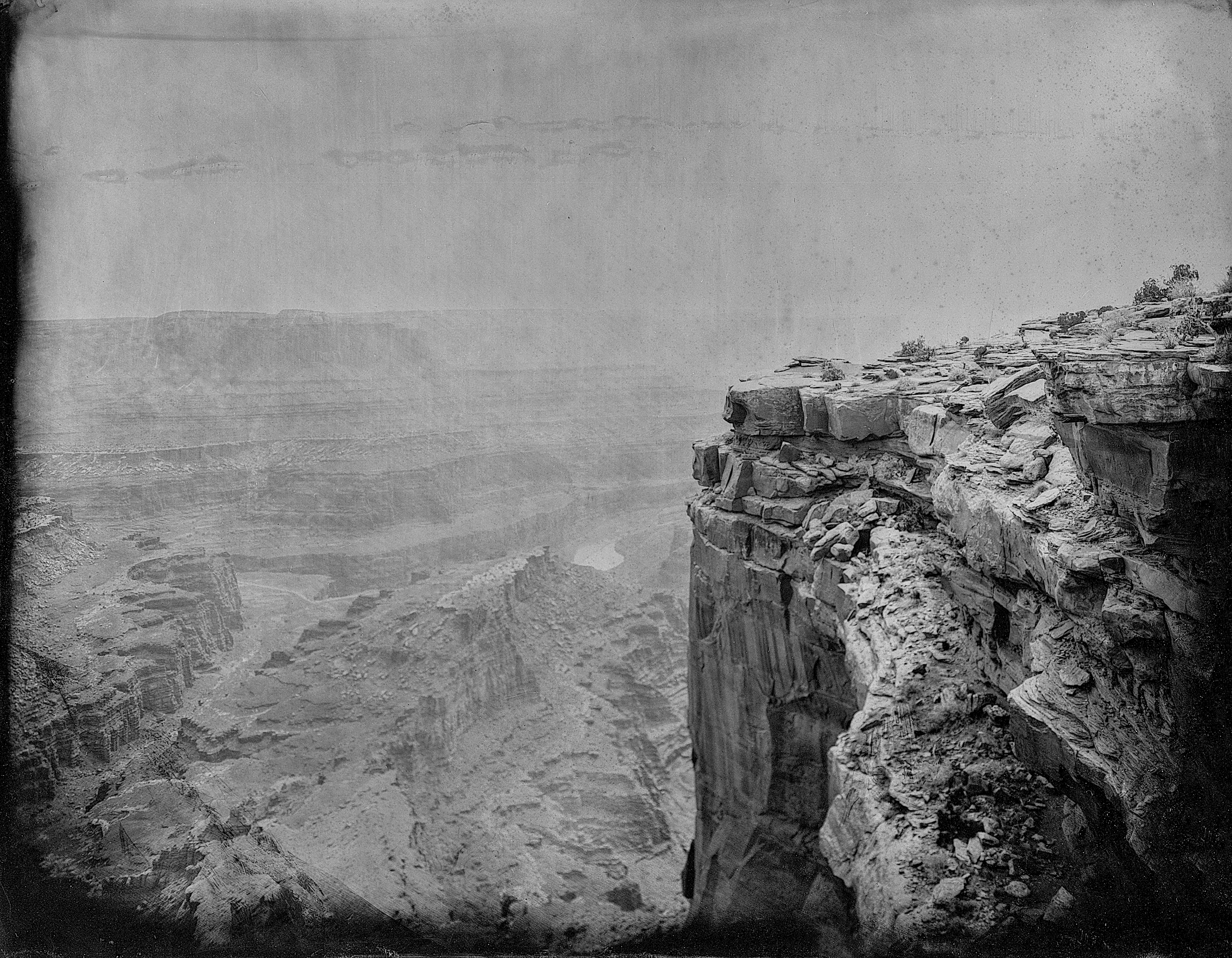
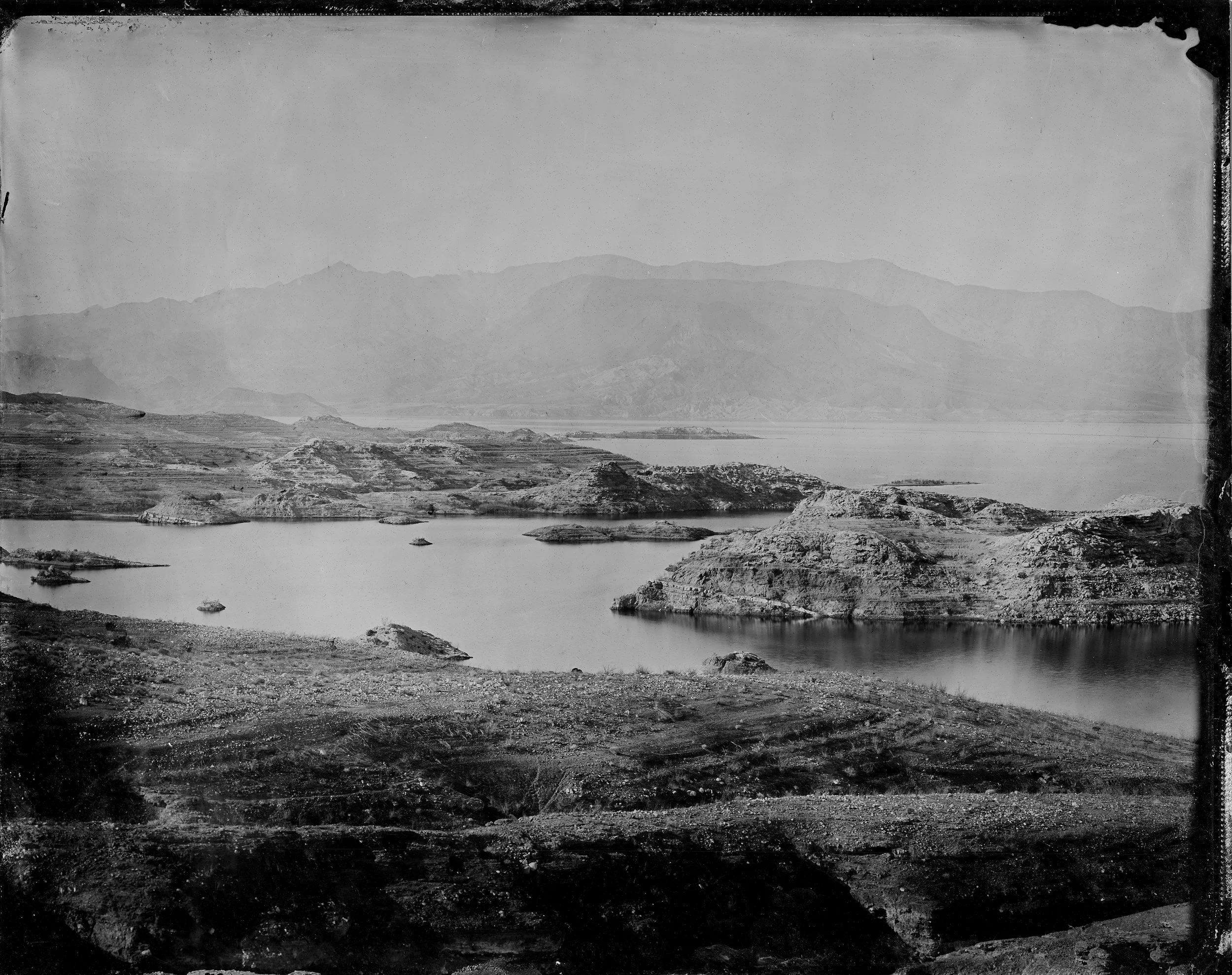
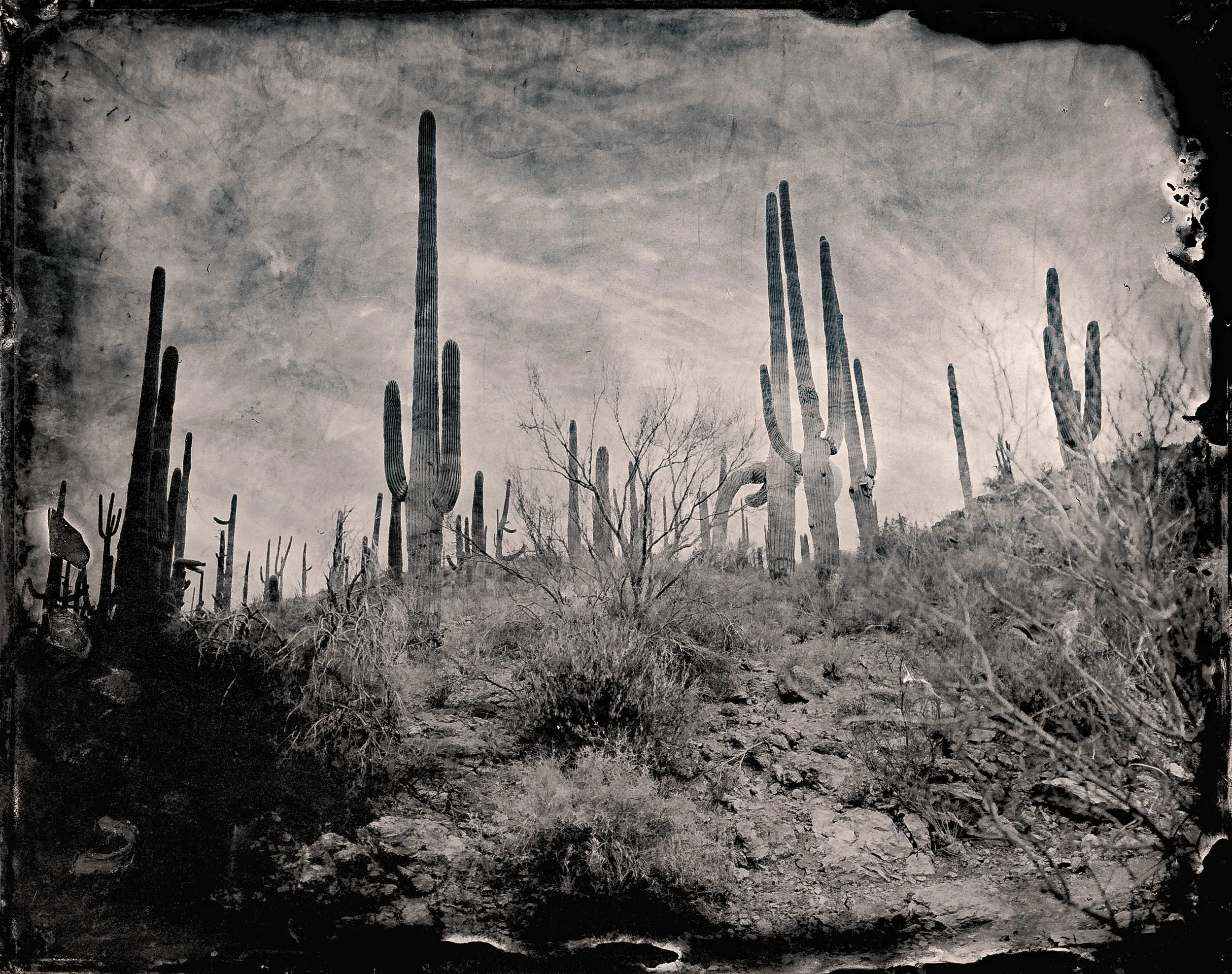
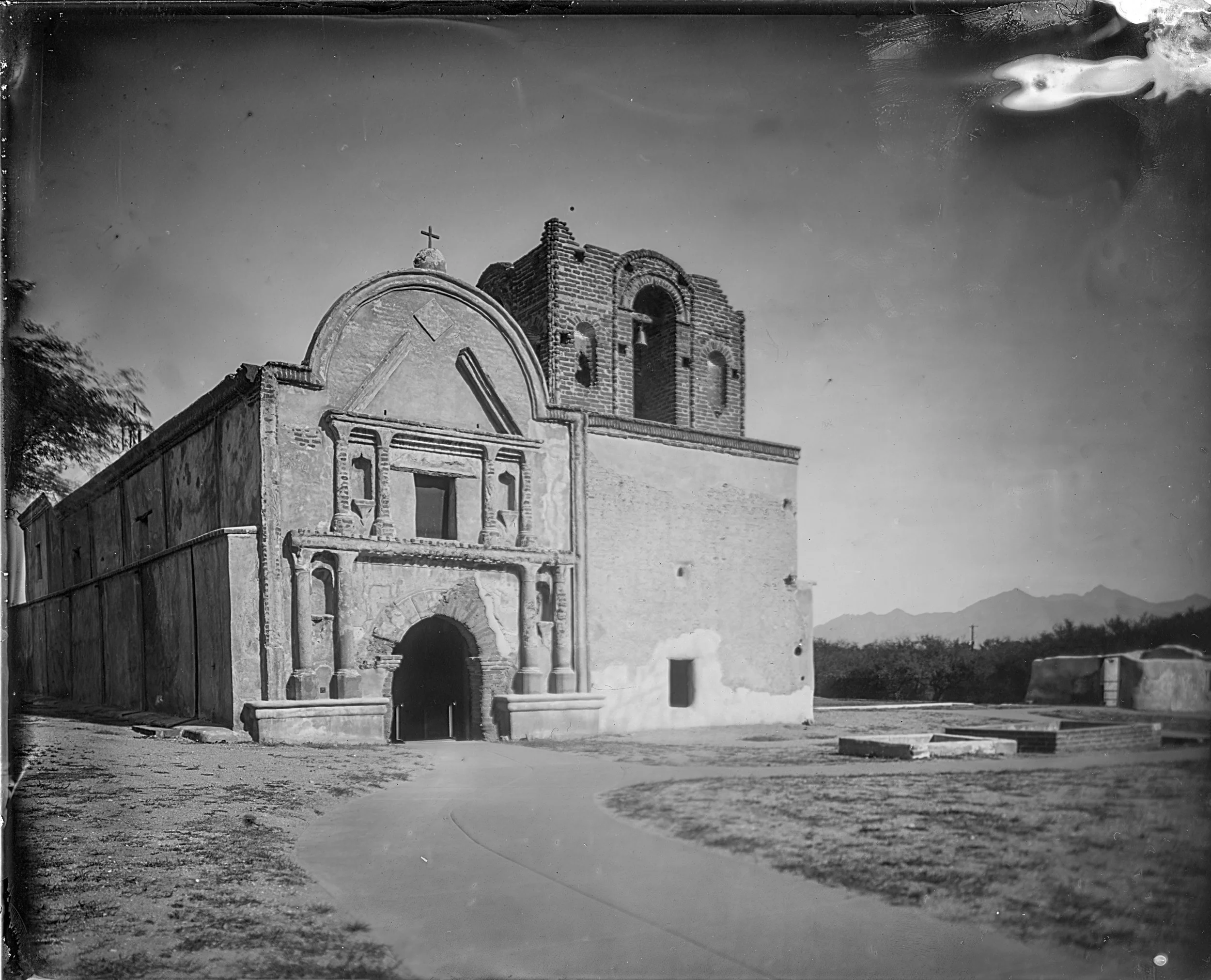
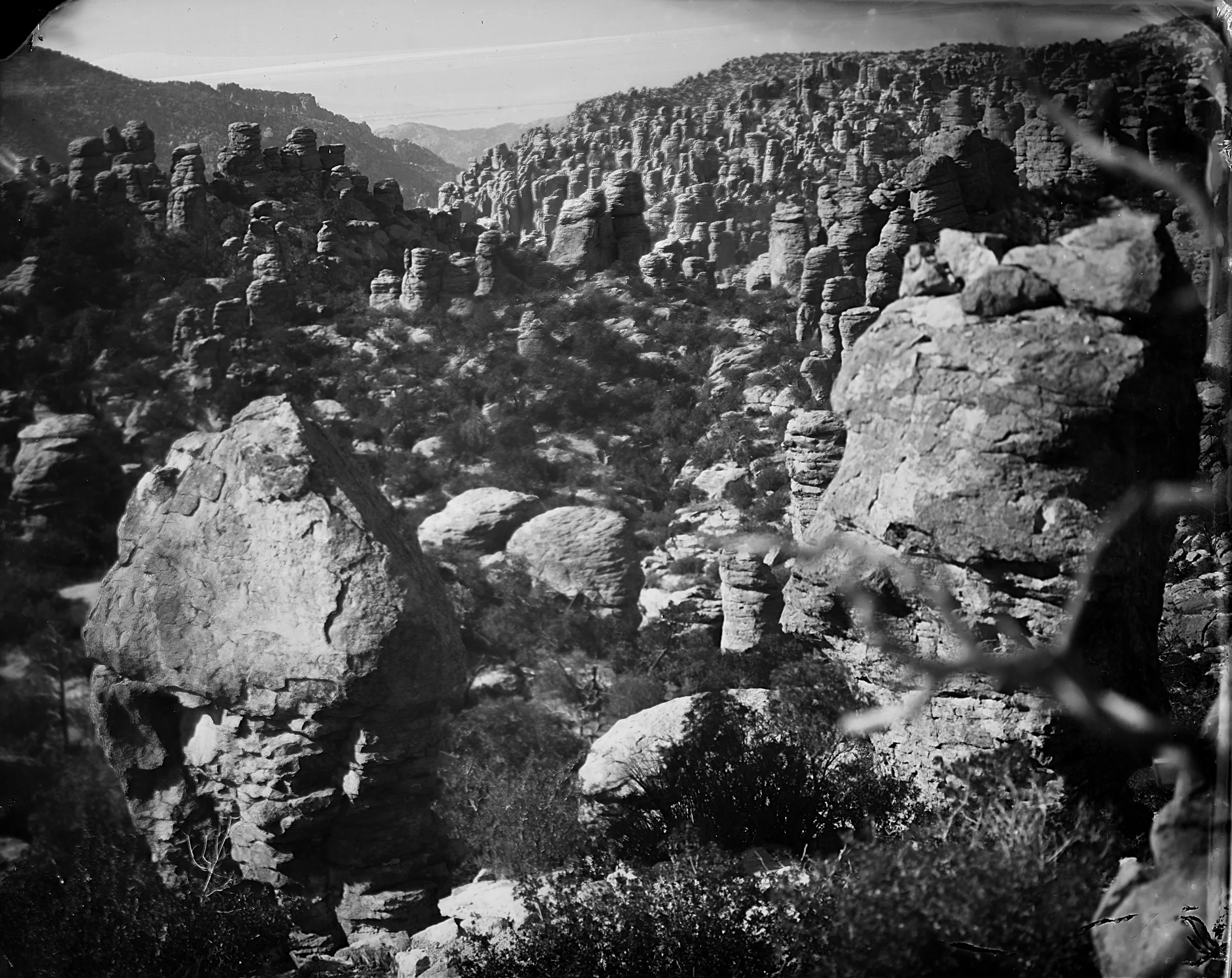
This photograph was made using the historic dry plate photographic process, a silver-based technique that predates modern film and digital photography. Dry plates require careful preparation and a single exposure, encouraging a slower, more deliberate engagement with the landscape—one that mirrors the immense geological timescales recorded in stone.
The rock formations of the Chiricahua Mountains are the result of violent volcanic eruptions followed by millions of years of erosion, creating towering spires, balanced stones, and narrow corridors of rock. Often described as a “stone forest,” the landscape feels simultaneously monumental and fragile, shaped by forces far beyond human memory.
Rather than documenting the site as a scenic vista, this plate emphasizes form, mass, and presence—allowing the rocks to read as ancient figures rather than landmarks. Subtle surface irregularities and tonal variations are inherent to the dry plate process and are preserved as part of the image, reinforcing its connection to early photographic traditions and physical materiality.
Part of the NomadType Southwest series, this work explores American landscapes through historic photographic methods, using 19th-century processes to reflect on deep time, impermanence, and the enduring weight of place.
Please visit my YouTube Channel to find out more about the making of this image in the episode:
This photograph was made using the historic dry plate photographic process, a silver-based technique that predates modern film and digital photography. Dry plates require careful preparation and a single exposure, encouraging a slower, more deliberate engagement with the landscape—one that mirrors the immense geological timescales recorded in stone.
The rock formations of the Chiricahua Mountains are the result of violent volcanic eruptions followed by millions of years of erosion, creating towering spires, balanced stones, and narrow corridors of rock. Often described as a “stone forest,” the landscape feels simultaneously monumental and fragile, shaped by forces far beyond human memory.
Rather than documenting the site as a scenic vista, this plate emphasizes form, mass, and presence—allowing the rocks to read as ancient figures rather than landmarks. Subtle surface irregularities and tonal variations are inherent to the dry plate process and are preserved as part of the image, reinforcing its connection to early photographic traditions and physical materiality.
Part of the NomadType Southwest series, this work explores American landscapes through historic photographic methods, using 19th-century processes to reflect on deep time, impermanence, and the enduring weight of place.
Please visit my YouTube Channel to find out more about the making of this image in the episode: