 Image 1 of 1
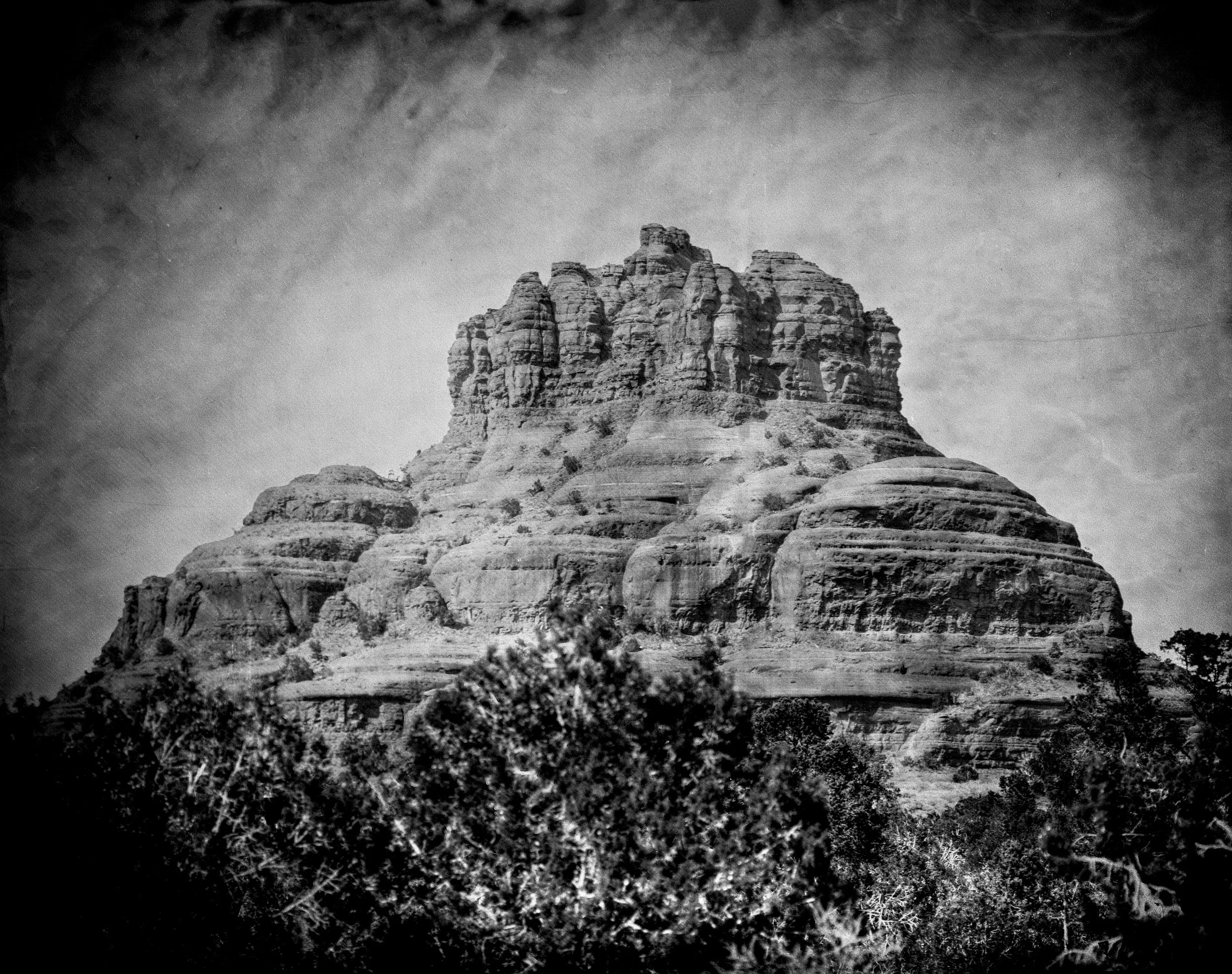
Bell Rock rises from Sedona’s red rock country like a landmark from another time—an unmistakable butte of iron-red sandstone that seems to glow from within when the light hits right. From certain angles it reads exactly like its name: a giant bell set down in the desert, softened by wind and weather. Early settlers named it for that shape, and the name stuck
For decades, it’s been known as one of Sedona’s most famous “vortex” sites: a location many visitors believe carries a distinct, intensifying energy—something that draws hikers, photographers, and quiet seekers to the same slopes day after day. Whether you come for the mystique or simply the geology, the experience is the same: the closer you get, the more the rock becomes less “scenery” and more presence—mass, silence, and scale.
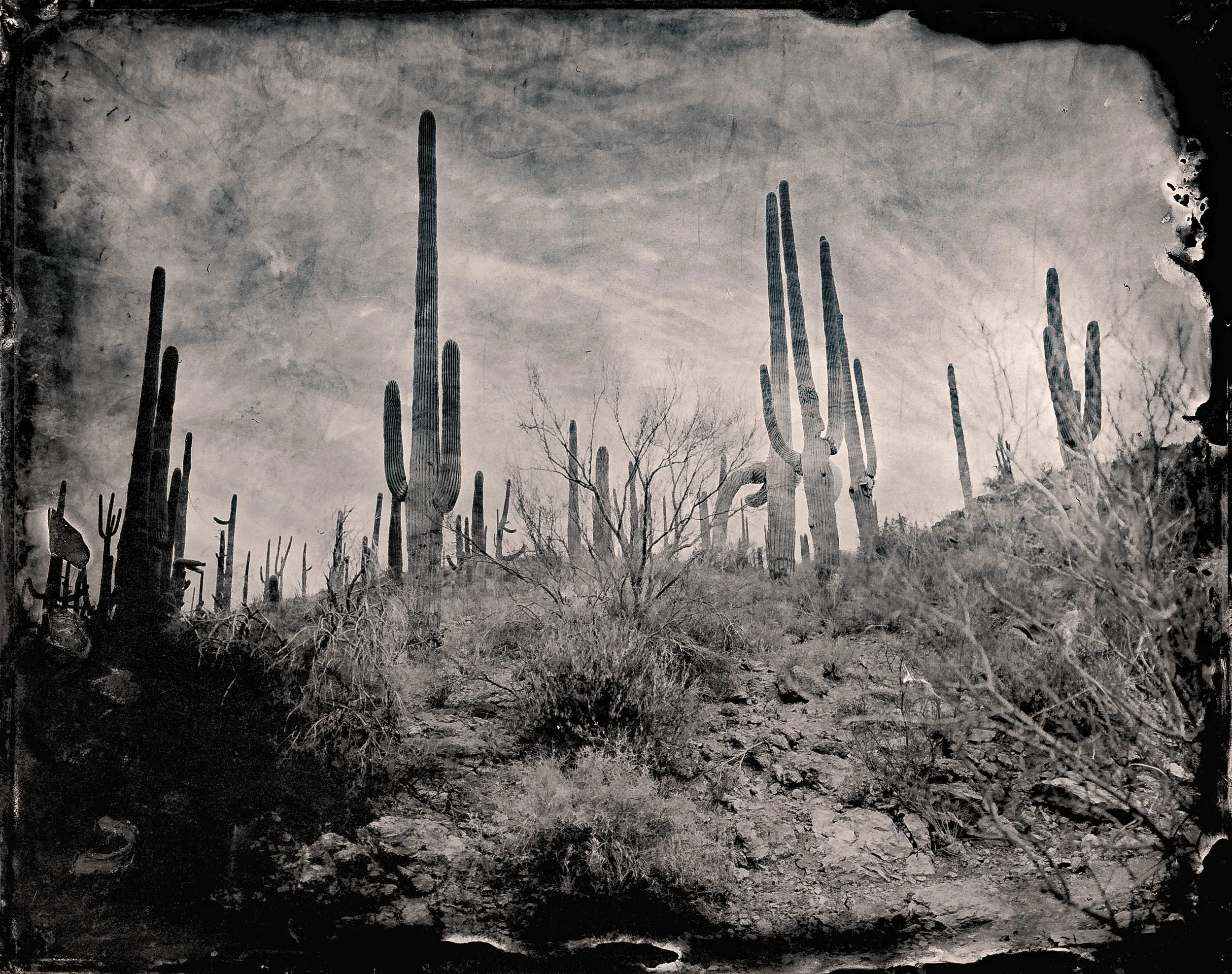
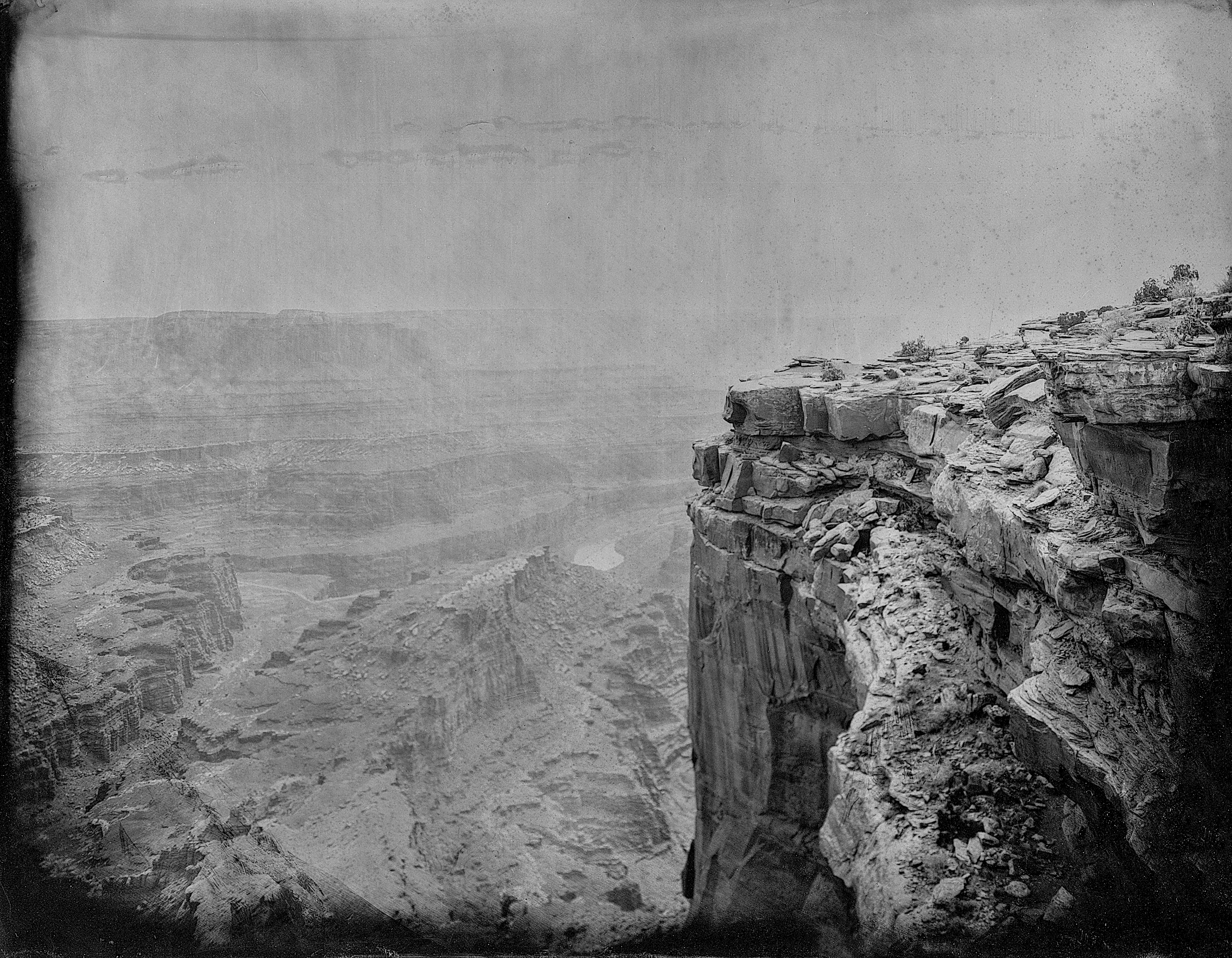
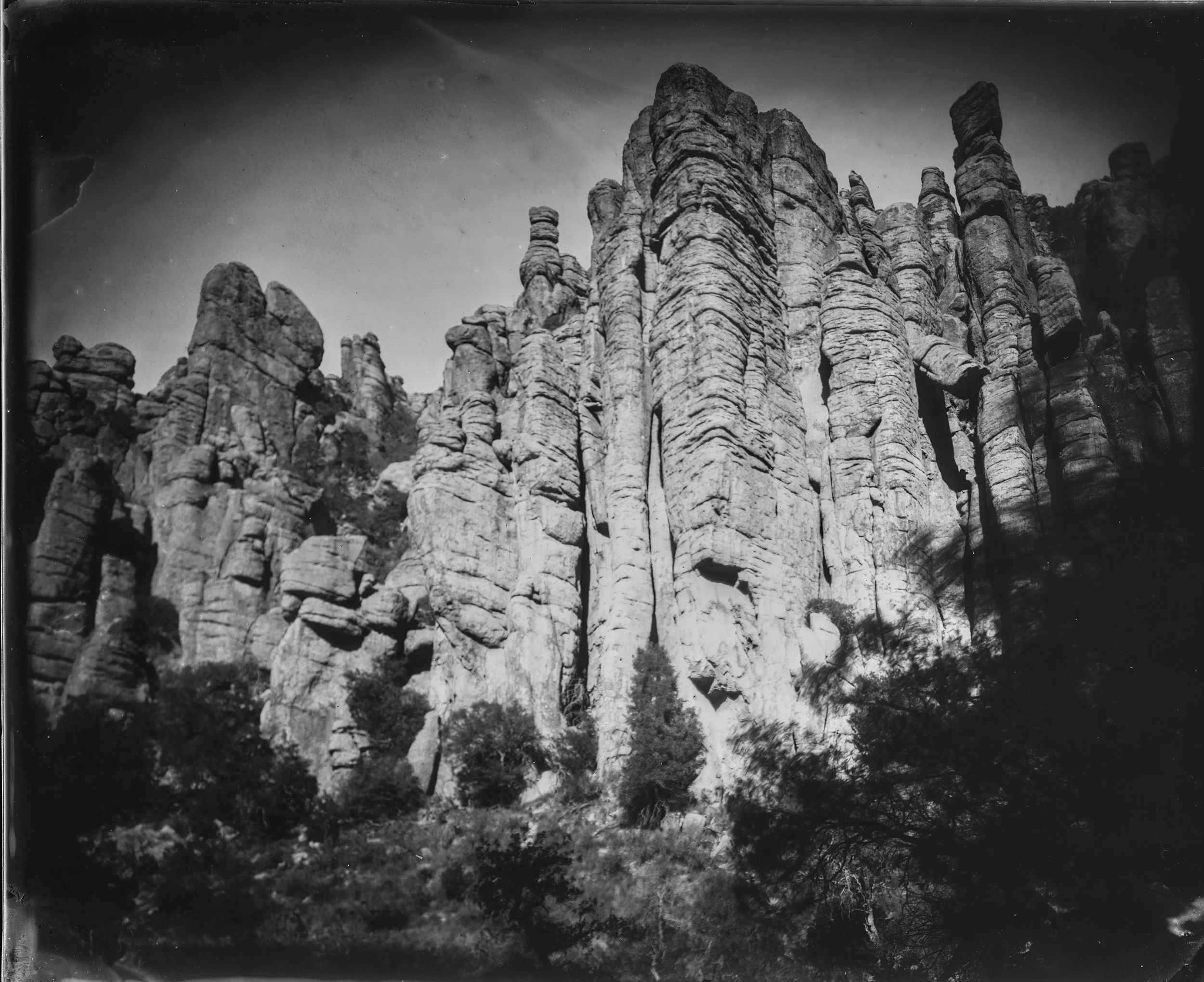
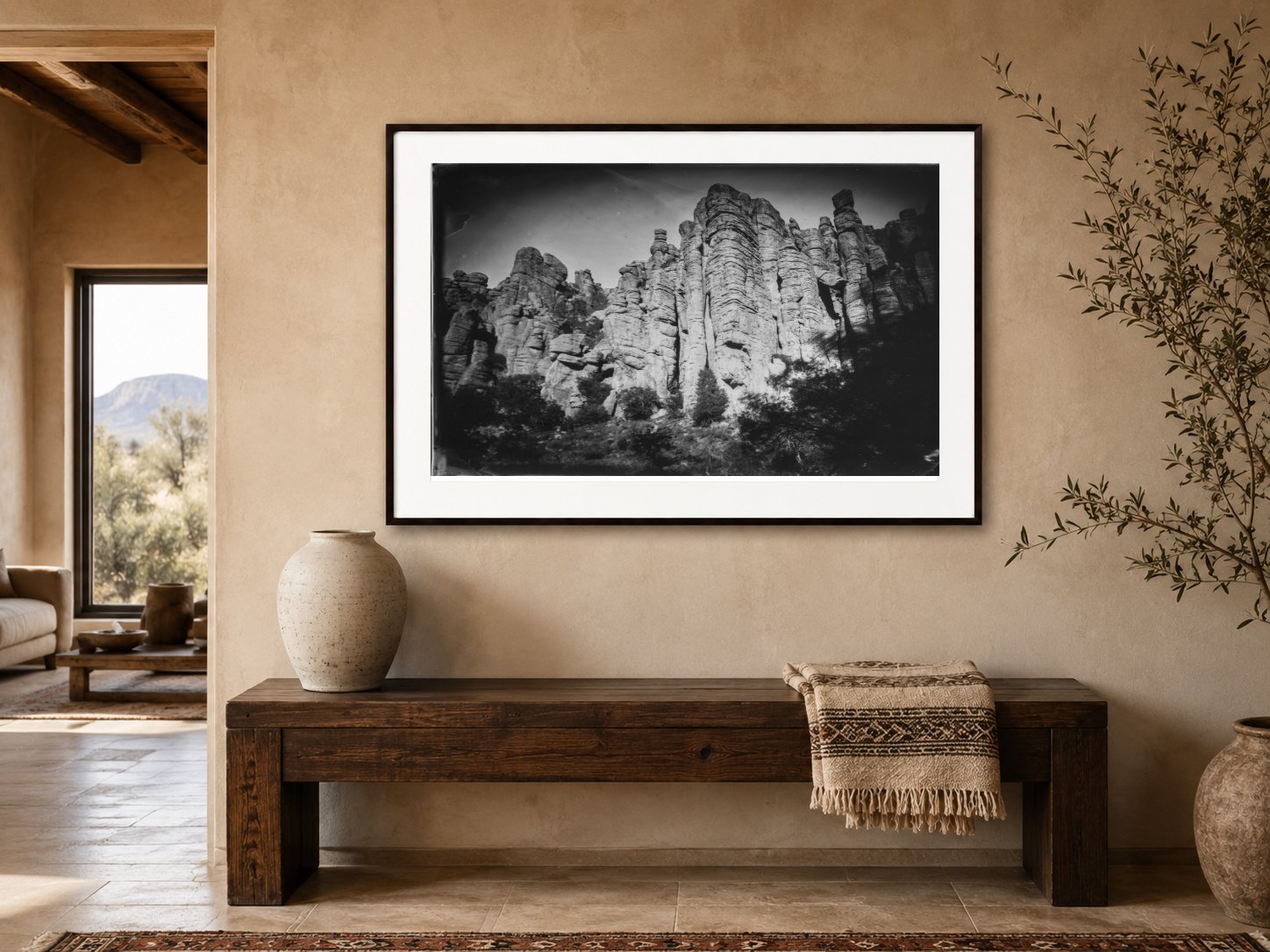
To honor that atmosphere, I created this piece as a wet plate collodion tintype—a 19th-century process where the photograph is made as a physical object in the moment. The plate is hand-poured, sensitized, exposed in a large-format camera, and developed on location while it remains wet. It asks for restraint and precision: one considered exposure, guided by experience rather than a screen. No preview, no repetition—only light, silver, and a brief, unforgiving window in which the image must arrive.
Bell Rock rises from Sedona’s red rock country like a landmark from another time—an unmistakable butte of iron-red sandstone that seems to glow from within when the light hits right. From certain angles it reads exactly like its name: a giant bell set down in the desert, softened by wind and weather. Early settlers named it for that shape, and the name stuck
For decades, it’s been known as one of Sedona’s most famous “vortex” sites: a location many visitors believe carries a distinct, intensifying energy—something that draws hikers, photographers, and quiet seekers to the same slopes day after day. Whether you come for the mystique or simply the geology, the experience is the same: the closer you get, the more the rock becomes less “scenery” and more presence—mass, silence, and scale.
To honor that atmosphere, I created this piece as a wet plate collodion tintype—a 19th-century process where the photograph is made as a physical object in the moment. The plate is hand-poured, sensitized, exposed in a large-format camera, and developed on location while it remains wet. It asks for restraint and precision: one considered exposure, guided by experience rather than a screen. No preview, no repetition—only light, silver, and a brief, unforgiving window in which the image must arrive.