The South West Collection
High desert quiet. Big skies. Old roads. This collection is my photographic tribute to the American Southwest—made through travel, patience, and a deep love of remote places.
Many pieces are created using wet plate collodion and other historical processes, producing images with a tactile, artifact-like quality—rich tones, subtle imperfections, and a sense of time you can feel.
Limited-edition prints are available for select works. Explore the collection below.

Photographed within Canyon de Chelly National Monument in northeastern Arizona, this image features the towering sandstone formation known as Spider Rock — an 800-foot spire that stands at the heart of Navajo legend. According to Diné (Navajo) tradition, the rock is home to Spider Woman, the weaver who taught the Navajo people the art of weaving and storytelling through thread.
Created using the wet plate collodion process, the photograph transforms light and depth into silver, capturing both the monument’s grandeur and its stillness. The technique’s subtle imperfections — the chemical edge marks and tonal falloff — lend the image a texture that echoes the erosion of time itself.
Part of the NomadType Southwest series, Spider Rock is not just a landscape but a portrait of reverence — a meeting of land, light, and myth rendered through a 19th-century photographic craft.
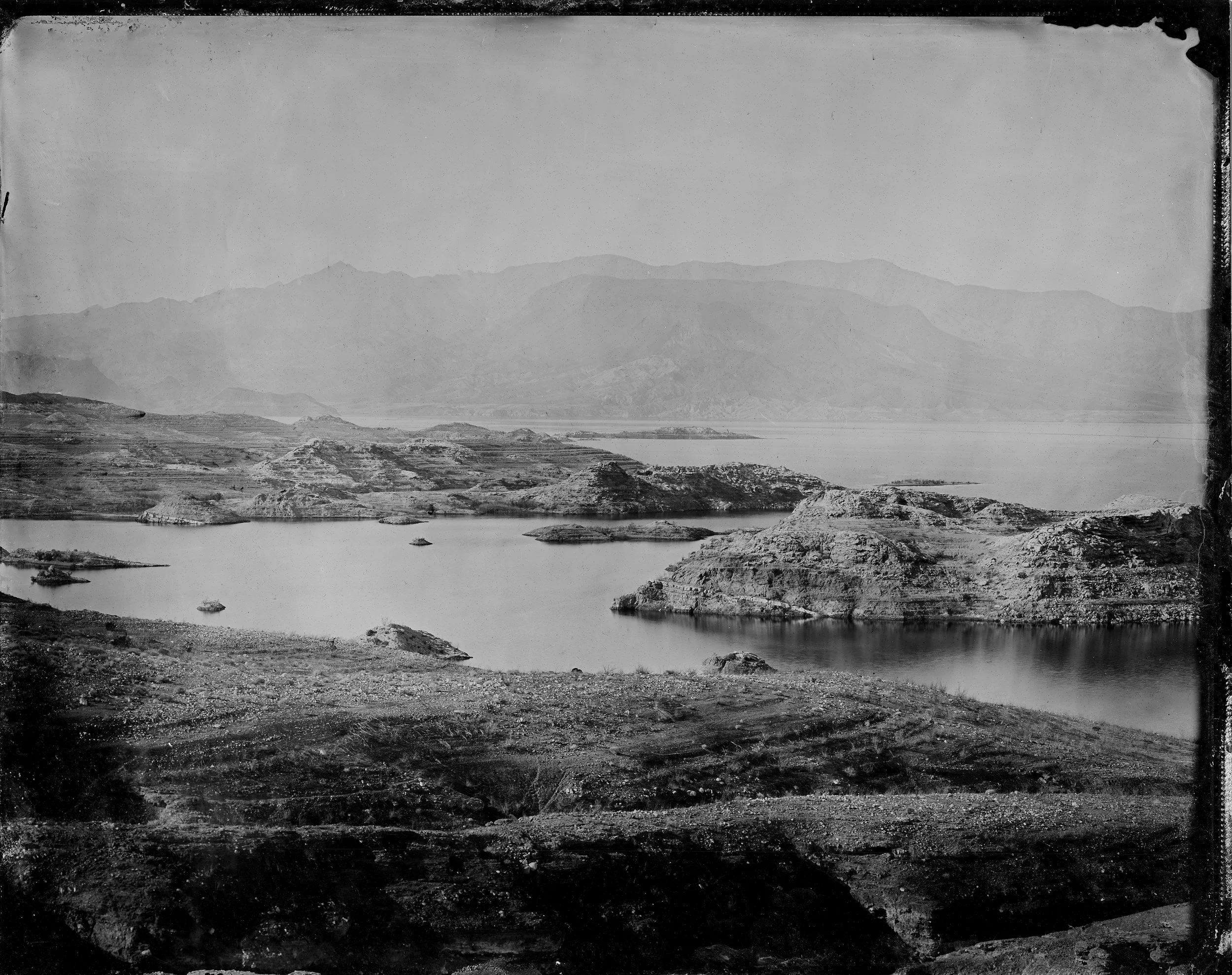
Capturing the Fading Waters: A Farewell Collodion Photography Plate to Lake Mead
The "Bathtub Ring" of Lake Mead is more than an environmental marker; it is a countdown. I took my large format camera to the receding shoreline to document a "Farewell Collodion Wet Plate" of a landscape in collapse, uncovering a hidden driver behind the disappearing water: the rise of the machines.
Capturing the Ephemeral I chose to document this crisis using Wet Plate Collodion photography. There is a haunting irony in using a 19th-century process—requiring physical water and silver—to capture a landscape being deleted by invisible data. Each "Farewell Plate" was coated, exposed, and developed on the shores of Lake Mead, capturing a permanent record of a disappearing world on glass and metal.
There is a physical loop in this project that the digital world can’t replicate. To develop these plates, I drew water directly from the receding shoreline of Lake Mead. I filtered out the silt, mixed my chemistry in the back of the truck, and used the lake's own molecules to bring the image to life. The 'Bathtub Ring' you see on the plate isn't just a picture of minerals; it was created by them. This plate was developed using the very water it depicts. When this lake is gone, the only thing left of its physical presence will be the silver on this glass.
From the negative scan of the plate these are limited edition giclee prints.
Please visit my YouTube Channel to find out more about the making of this image in the episode:
Watch the Film: TO THE LAST DROP
Read the Field Notes
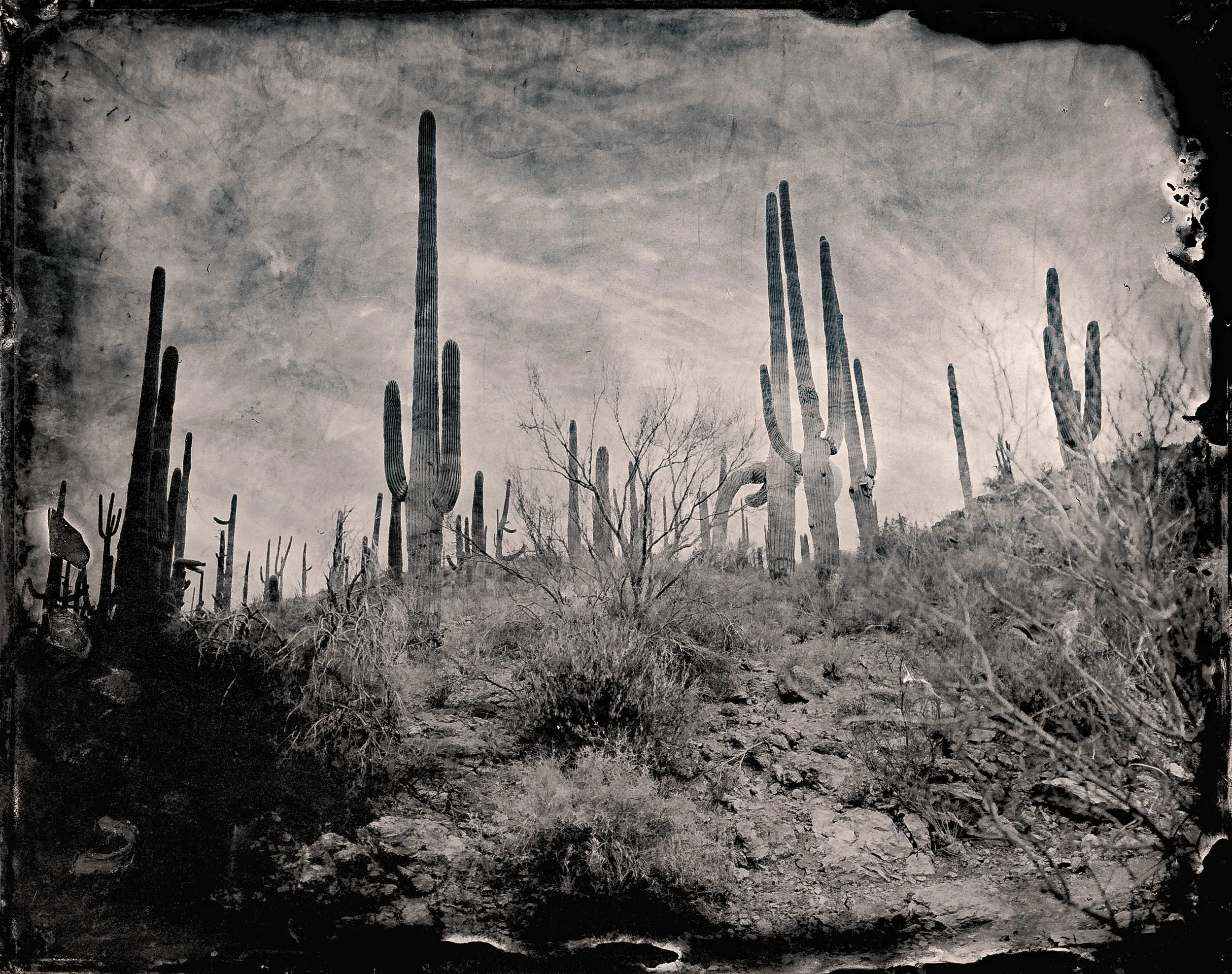
Photographed in the Sonoran Desert near Tucson, Arizona, this image captures the landscape that defines the region — a horizon of saguaro cacti rising against open sky. Each cactus, centuries old, stands like a figure of time and endurance, shaped by heat, light, and silence.
Created using the wet plate collodion process, the photograph renders the desert in deep silvers and subtle shadows. The slow exposure reveals detail in the ribs of each saguaro and the faint shimmer of dust in the air. The process’s hand-poured imperfections mirror the raw, elemental nature of the landscape itself.
Part of the NomadType Southwest series, Saguaro City reflects the quiet strength of the Sonoran Desert — a place where light and patience shape everything that endures.
Please visit my YouTube Channel to find out more about the making of this image in the episode: