TO THE LAST DROP: The Chemistry of a Disappearing Lake
Why make a handmade image here?
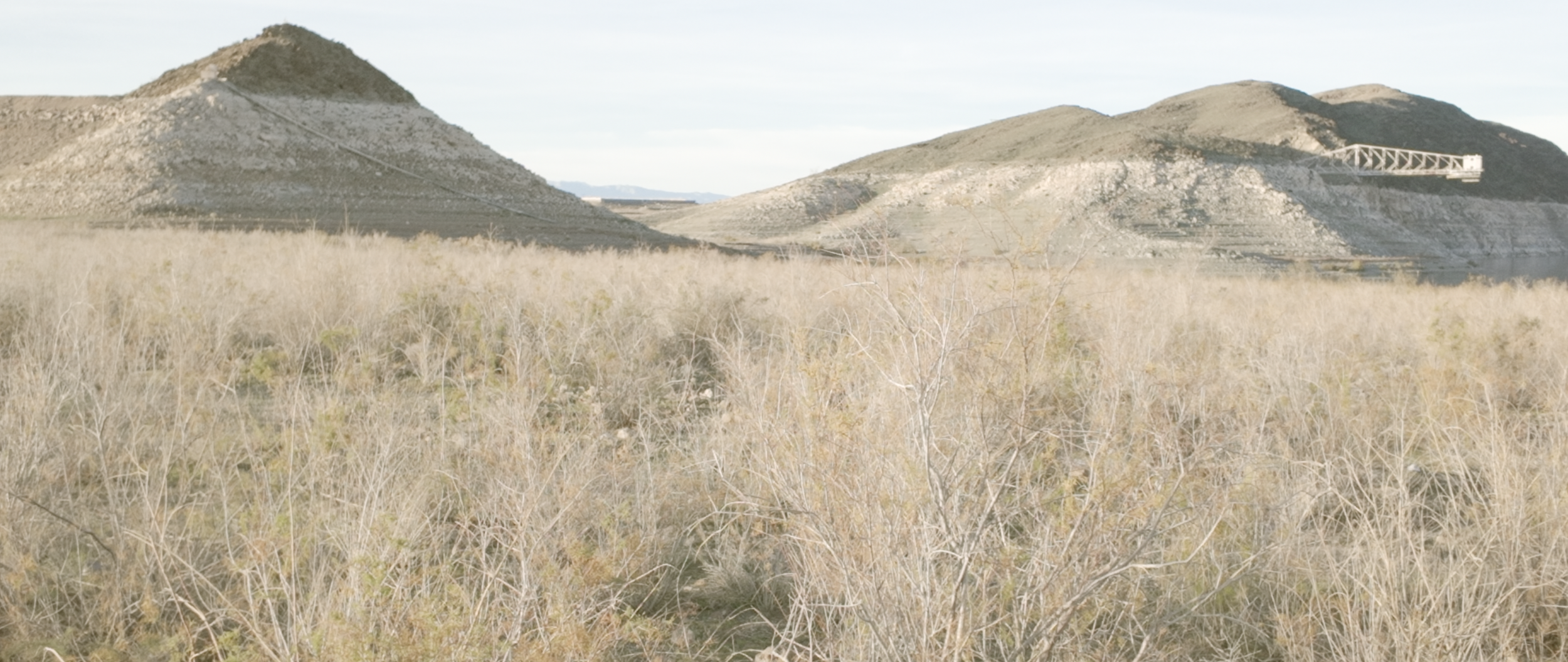
Lake Mead has always felt enormous—almost permanent. A vast blue shape pressed into the desert. But if you’ve been here more than once, you don’t need a chart to notice it. The shoreline keeps moving. Familiar lines on the rock sit higher. New ground appears where water used to be.
A handmade photograph is a strange thing in 2026. It isn’t convenient. It isn’t fast. It isn’t infinite.
That’s exactly why it matters.
When the world changes quietly, the temptation is to scroll past it. To let it become background. But a wet plate demands the opposite. It asks you to slow down, commit to a frame, and make something physical—something that can be held long after the light has changed and the shoreline has shifted again.
The "Bathtub Ring" of Lake Mead is a white mineral scar marking a countdown. It is a record of what happens when the demands of the modern world outpace the resources of the natural one.
For my latest project, I went to the receding shoreline with a Large Format camera and a specific goal: I didn't want to just photograph the crisis. I wanted the lake to be the literal medium of the work. I came to make one honest image—an artifact of what it felt like to stand here at this point in time.
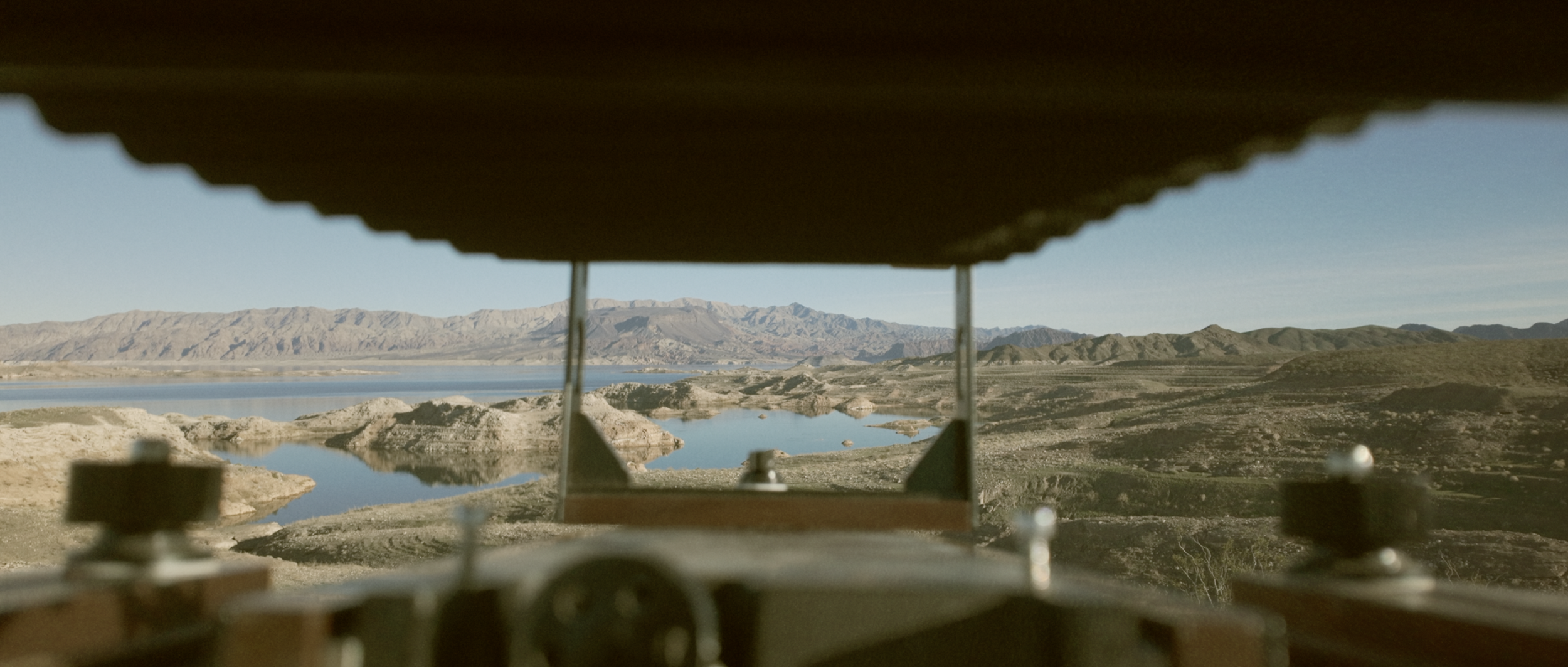
Lake Mead, Nevada, USA
The search
Most of the work happened before the 8x10 camera and the Wet Plate Collodion ever came out.
We drove the edge of the lake, stopping at different parts of the shoreline, walking down, and testing compositions with a digital camera—looking for the frame that told the truth. Not the prettiest view. The right one.
A lot of places were almost right. Beautiful, even. But the message didn’t hold.
The moment I knew we had it wasn’t dramatic. It was quiet. The kind of certainty that arrives when the picture finally matches the feeling. We marked the spot in the simplest way—stones —our own signal that the search was over.
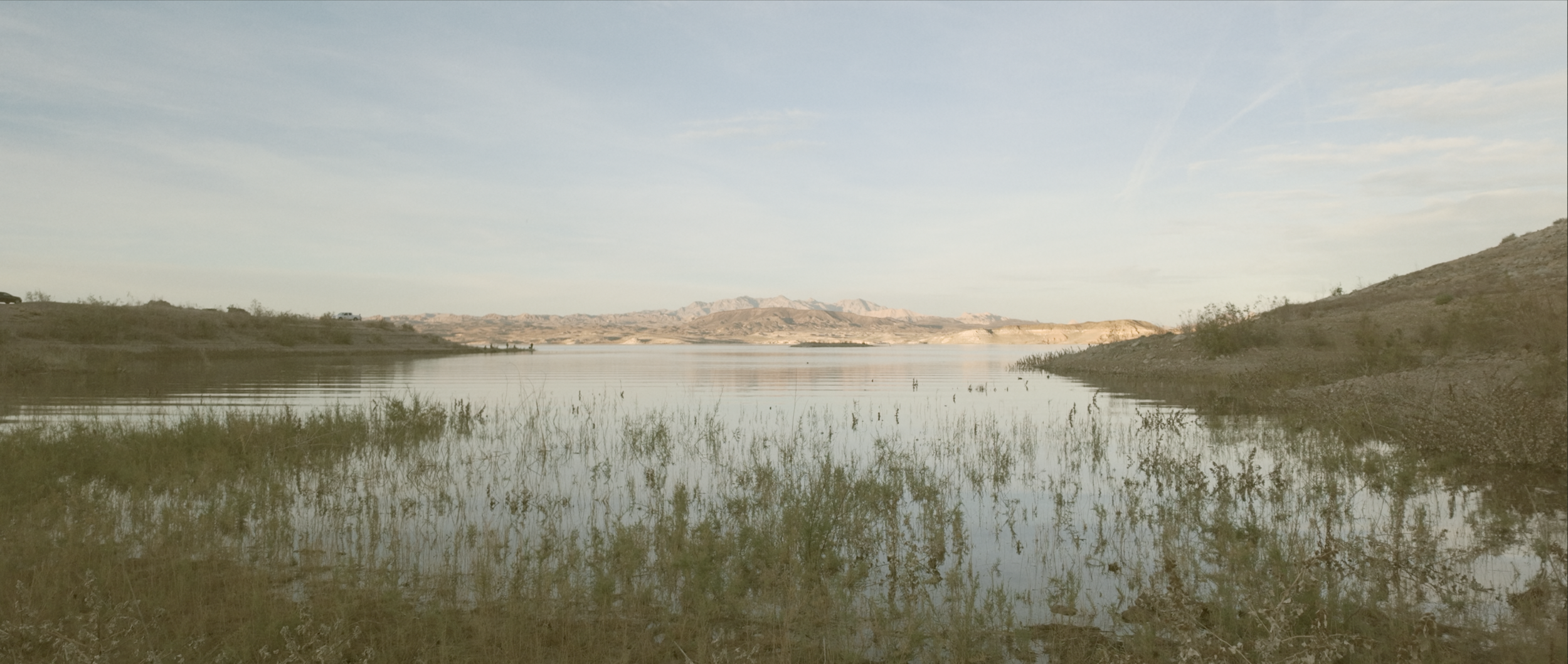
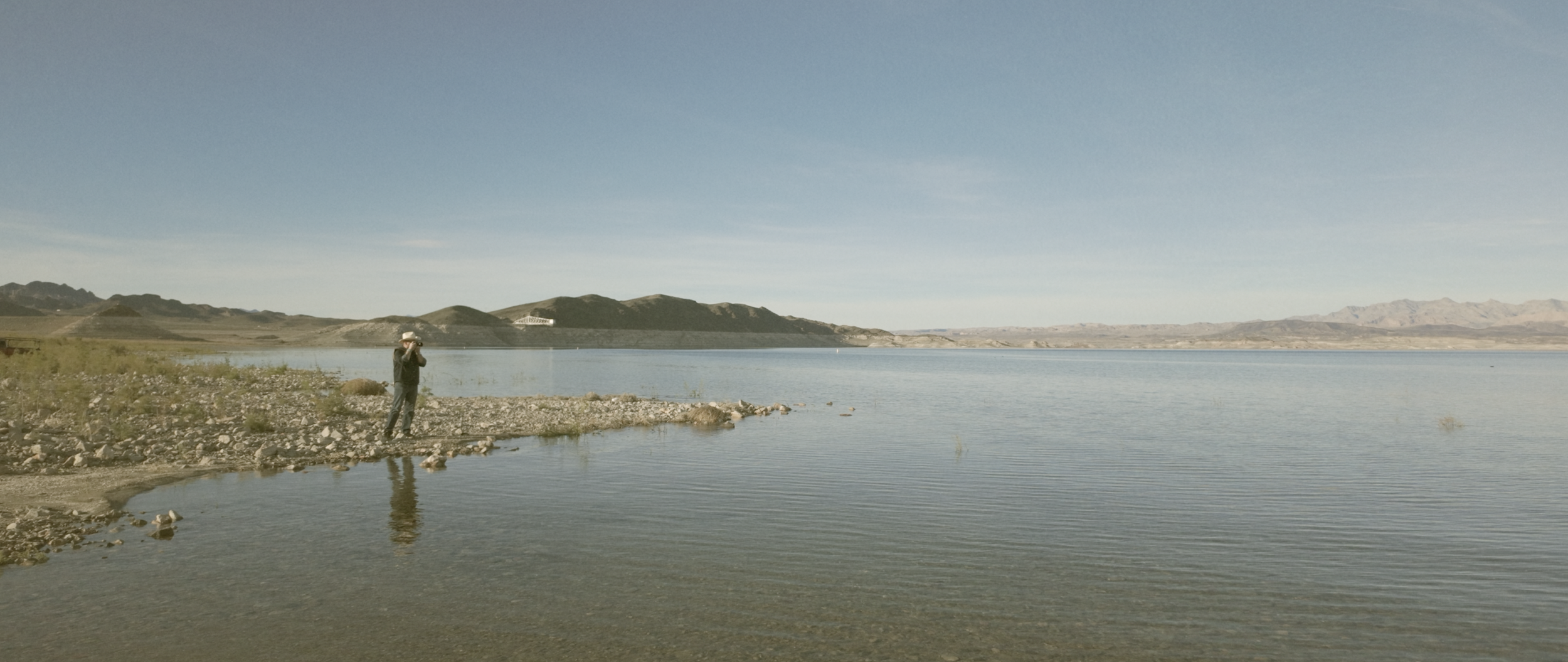
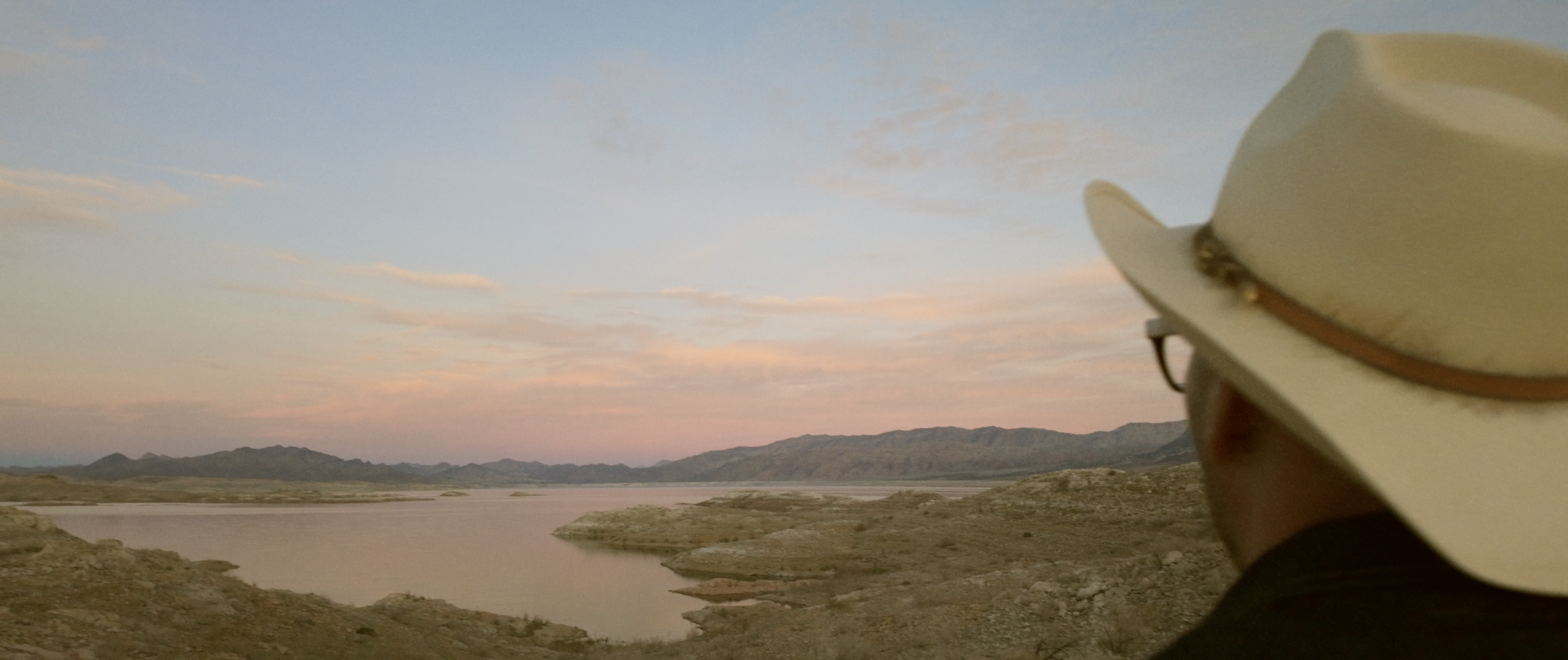
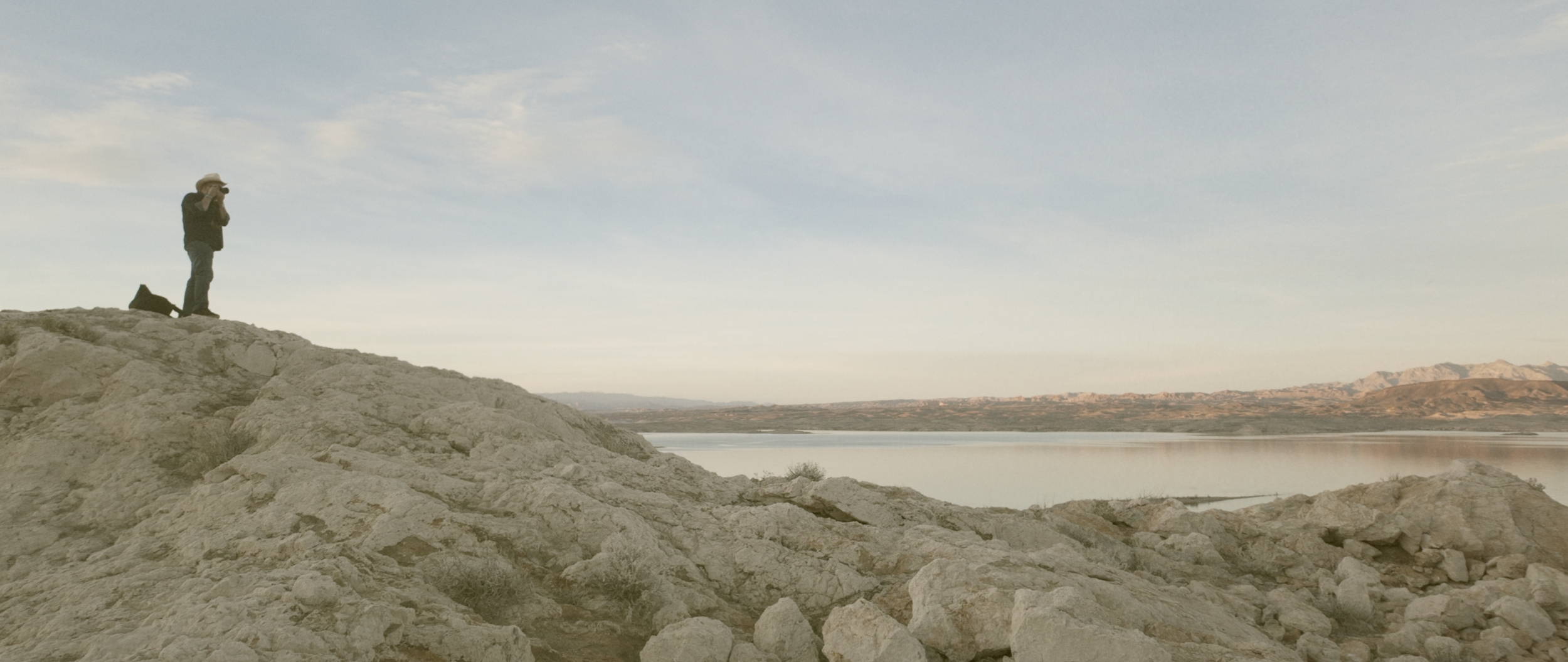
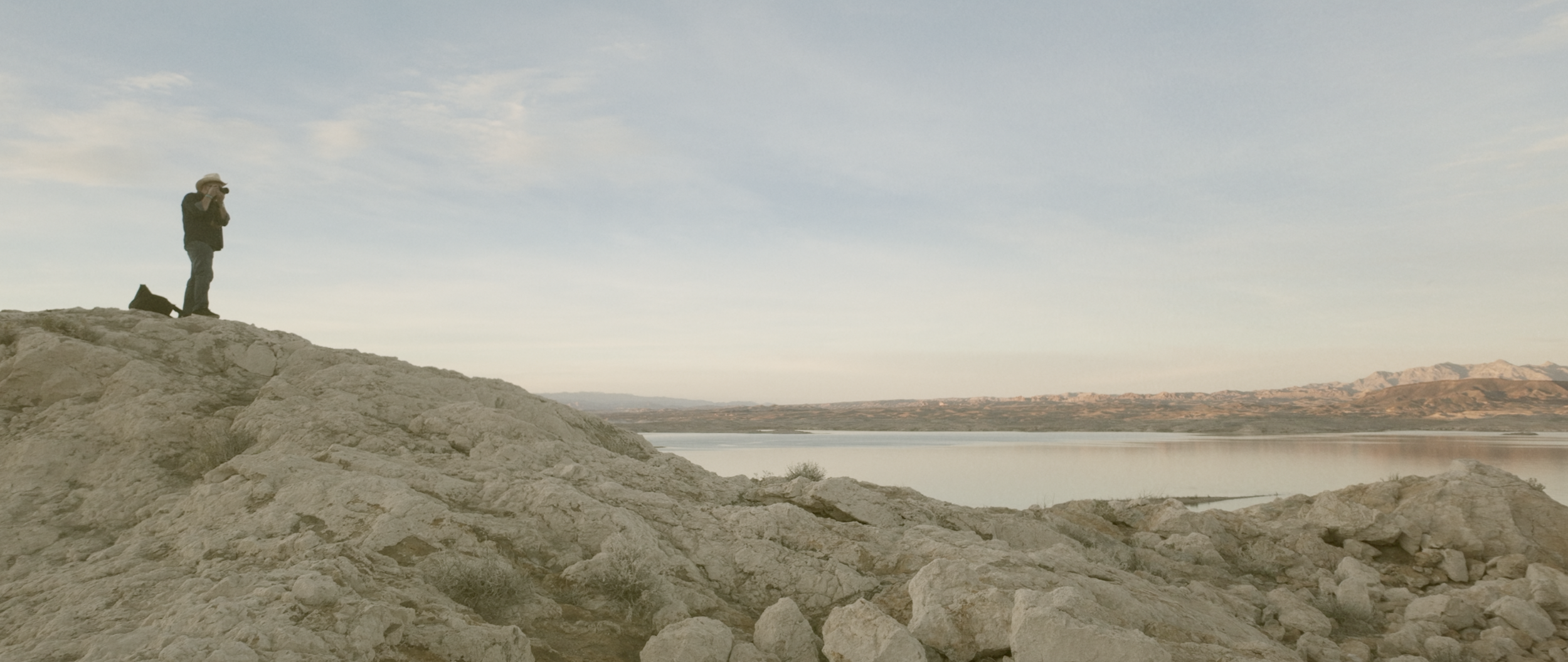
Location scouting at Lake Mead, Nevada, USA
The Material Record
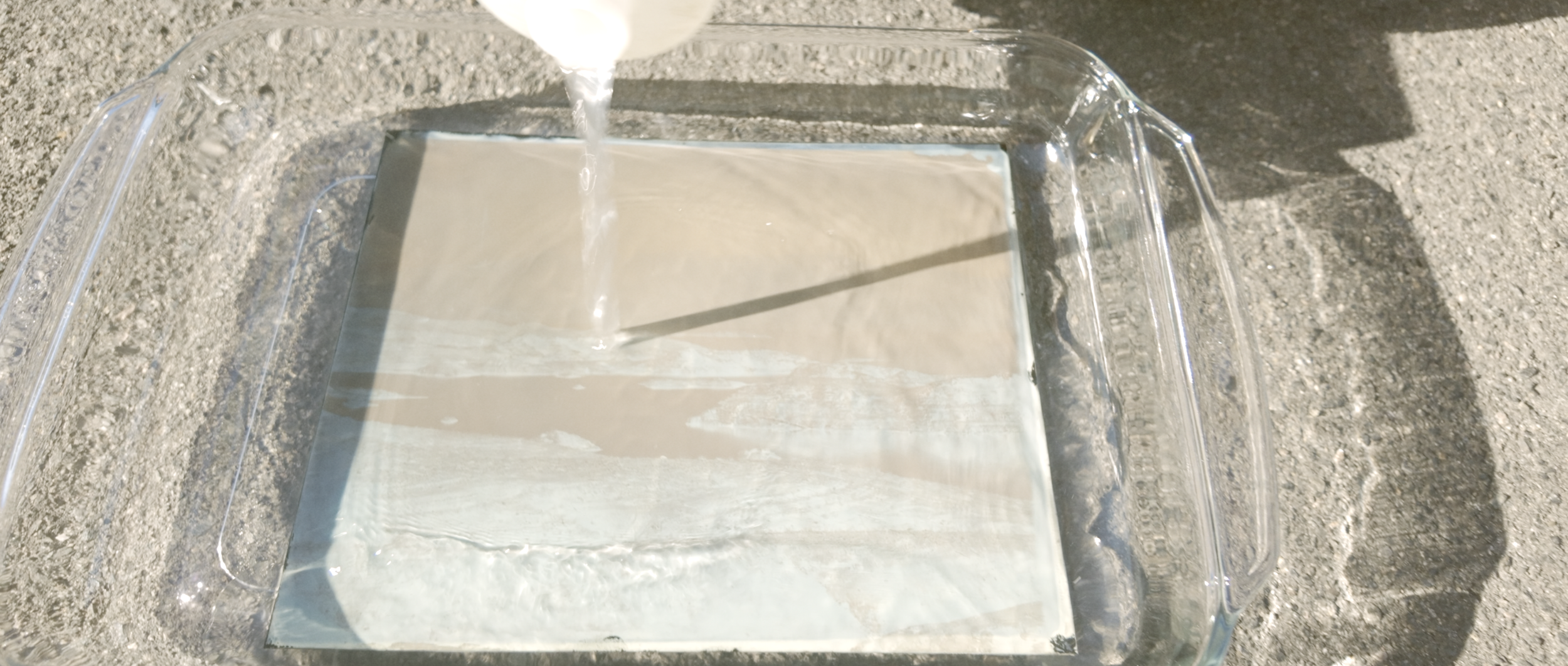
In the back of my darkroom truck, the process of Wet Plate Collodion became a physical dialogue with the environment. I made the decision to use the lake supply itself for the entire chemical cycle of these plates.
Before coating the glass, I drew water from the source and ran it through a filter. I expected to find the grit and silt of a dying reservoir. Instead, the water was unnervingly clear—less like a raw river and more like a processed utility, already primed for the pipes of Las Vegas and the cooling loops of the data centers.
I used this filtered lake water to mix my developer and my fixer. The silver grains you see on these plates are physically bonded to the glass by the same molecules currently evaporating from the desert floor. When you look at the "Bathtub Ring" in these images, you are looking at a distillation of the lake's chemistry.
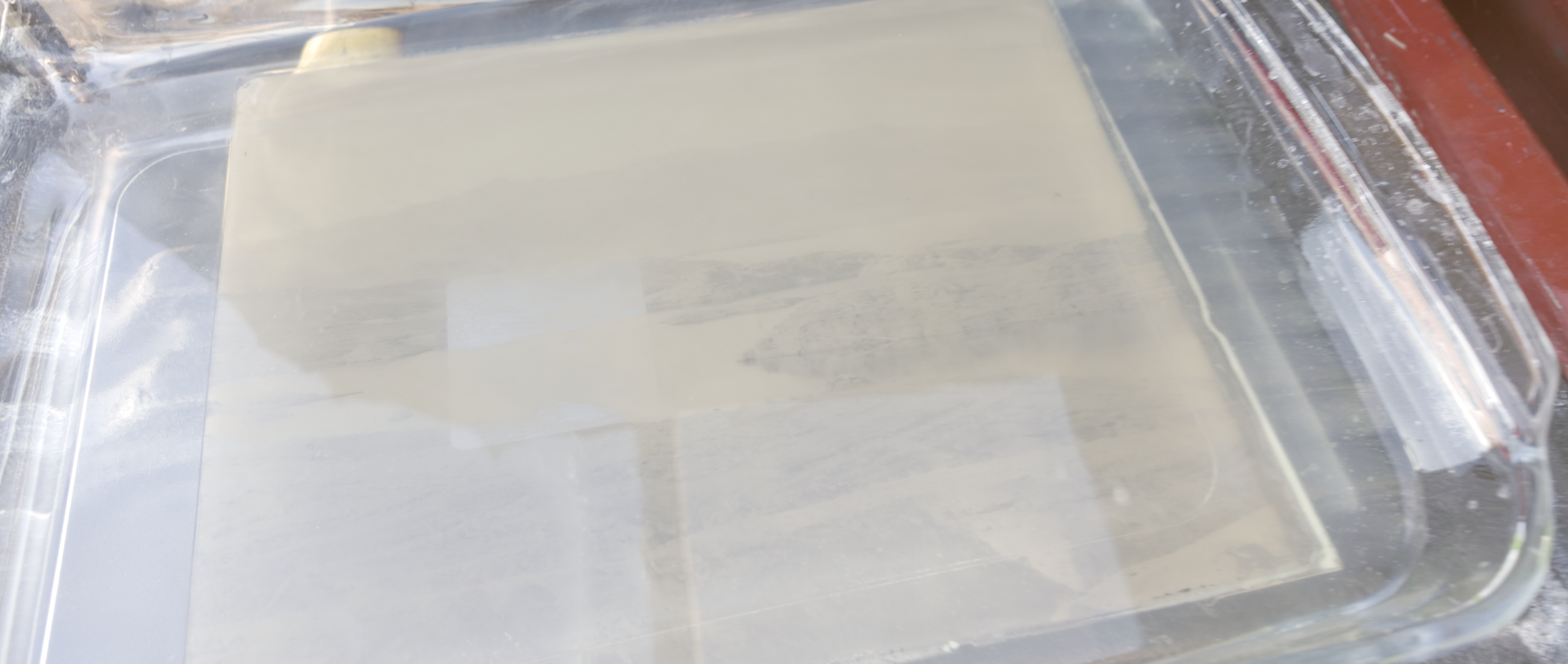
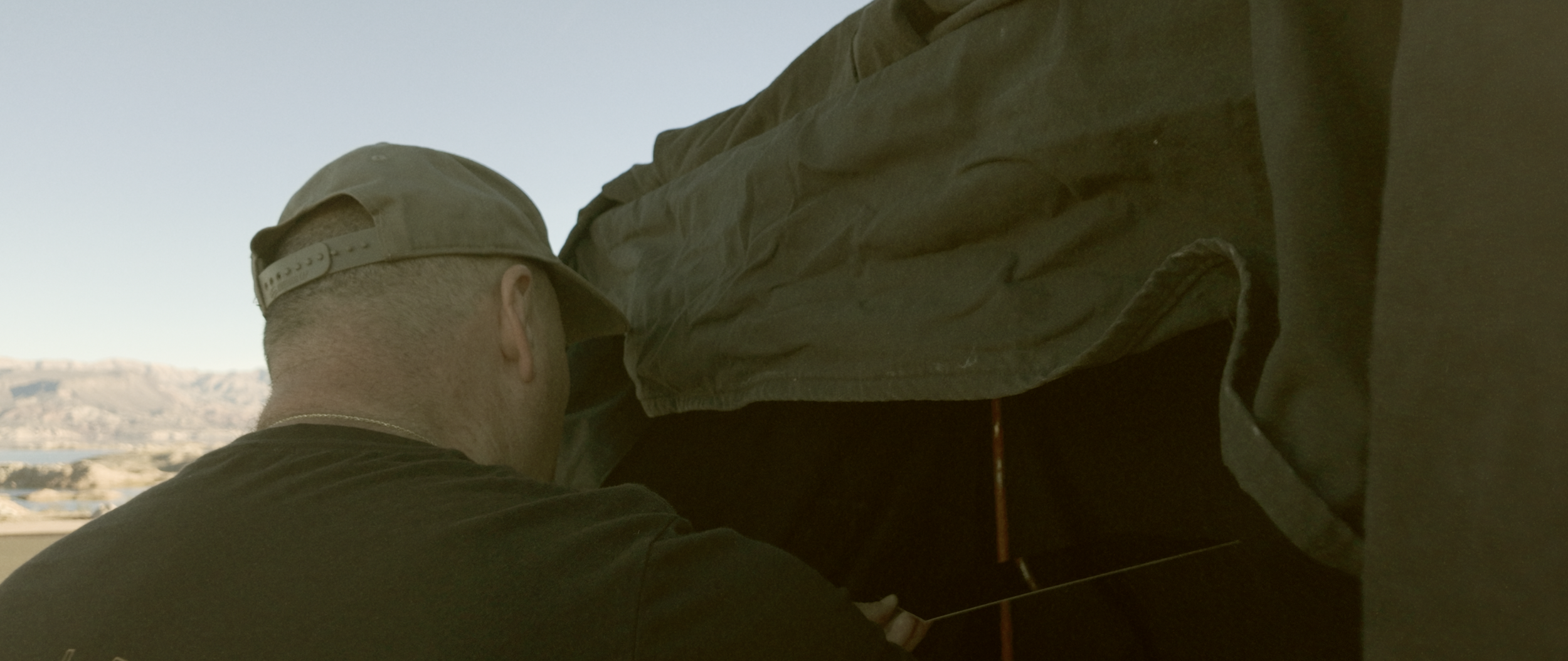
The Invisible Thirst: Data vs. Nature
The irony of our "Information Age" is that it is incredibly thirsty. While we discuss "The Cloud" as an abstract digital space, its physical footprint is consuming our most vital resources.
Massive data centers powering the AI explosion require billions of gallons of water for cooling. Experts estimate that within two decades, the cooling needs of these facilities could drop Lake Mead by an additional four feet every single year. We are trading our physical heritage for digital progress. Every prompt has a liquid cost.
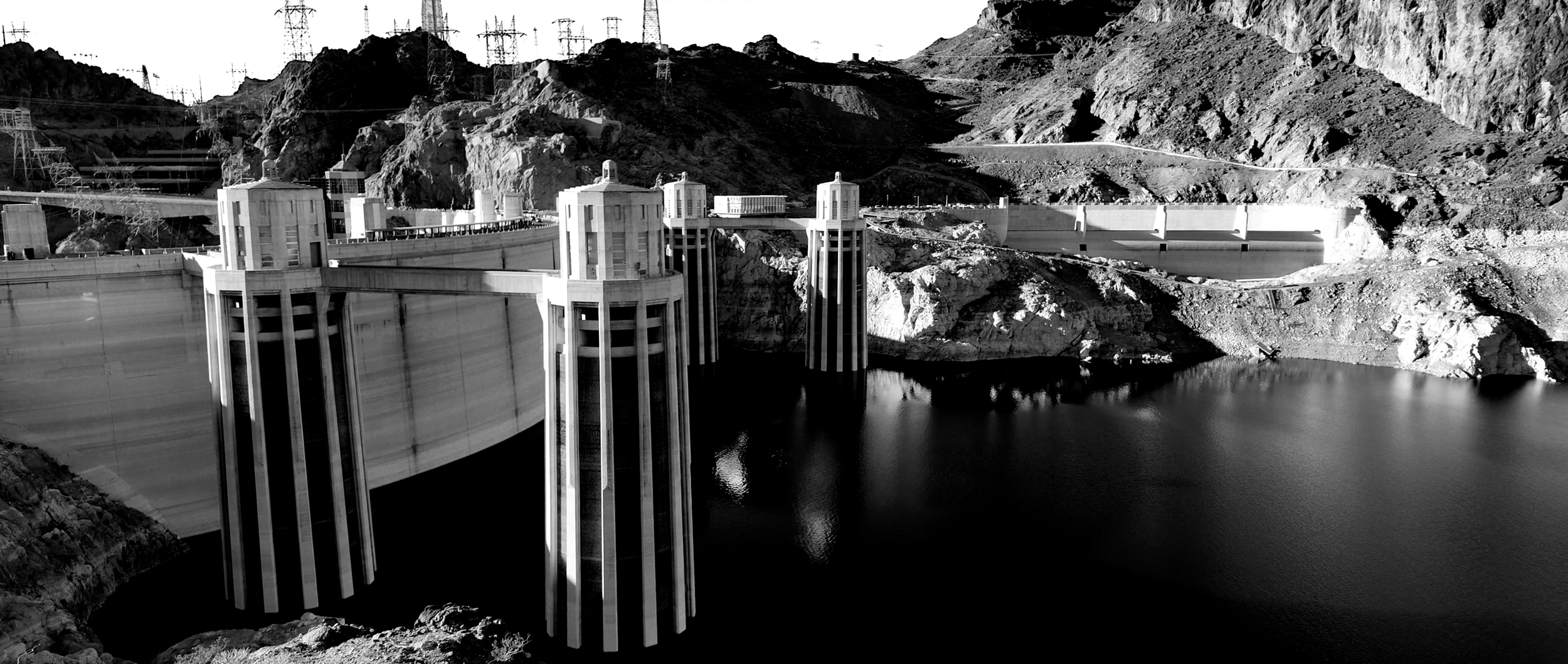
The Hoover Dam, Lake Mead, Nevada, USA
New Topographics and the Farewell Plate
In the tradition of the New Topographics movement, I’ve rejected the romanticized, "pristine" view of the American West. These plates are deadpan and honest. They document the "man-altered" reality of the shoreline—the cracked earth, the exposed intake pipes, and the silence of a receding tide.
I call these "Farewell Plates." They are a permanent record of a disappearing world, captured in silver and glass through a direct chemical link before the last drop is gone.
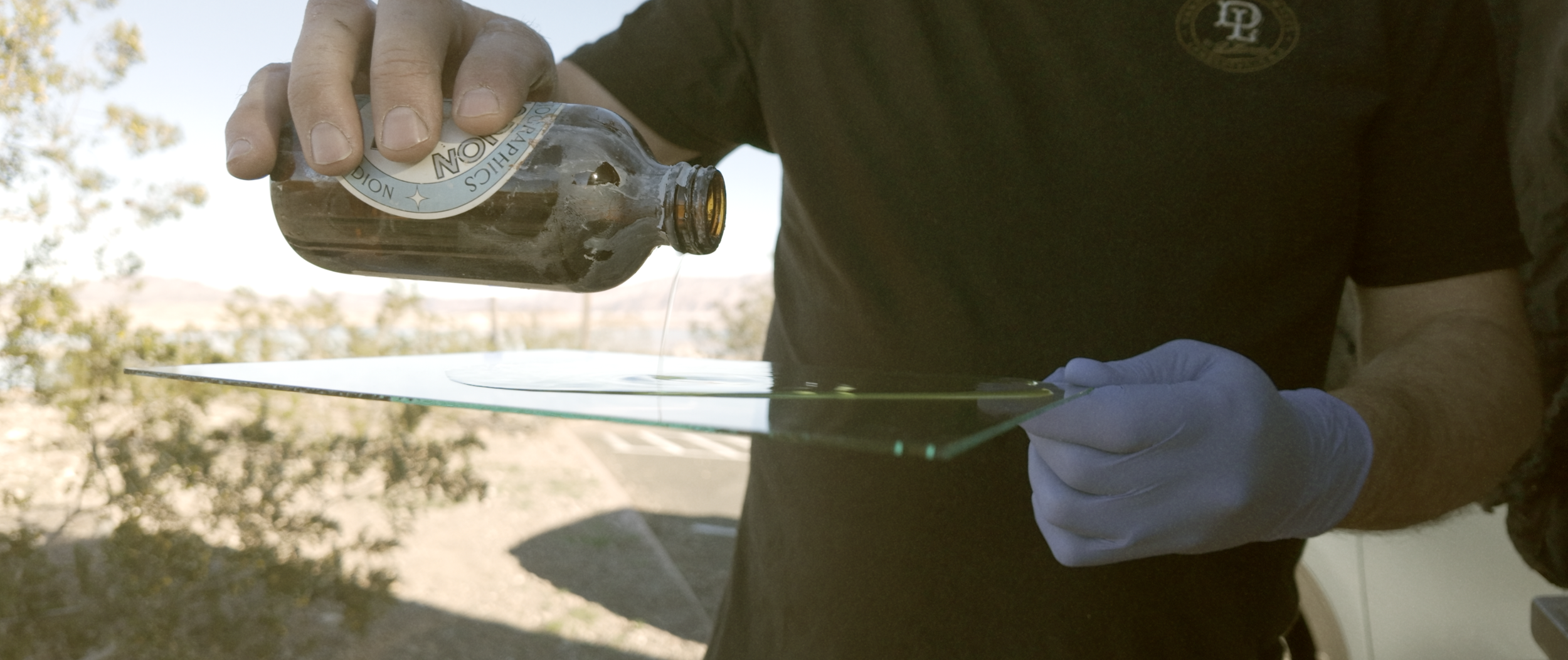
Pouring Collodion onto a glass plate to create a Wet Plate Collodion Negative
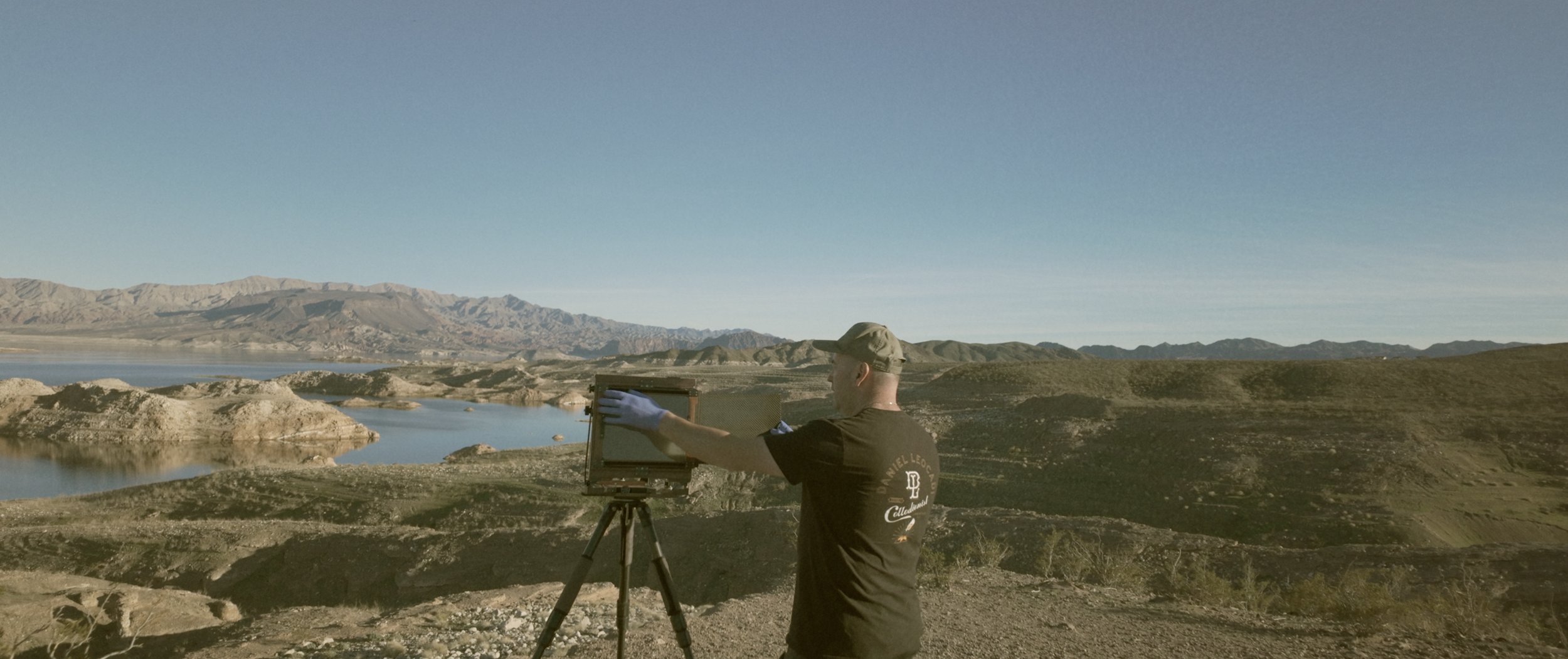
Shooting a wet plate collodion glass plate negative with an 8×10 camera
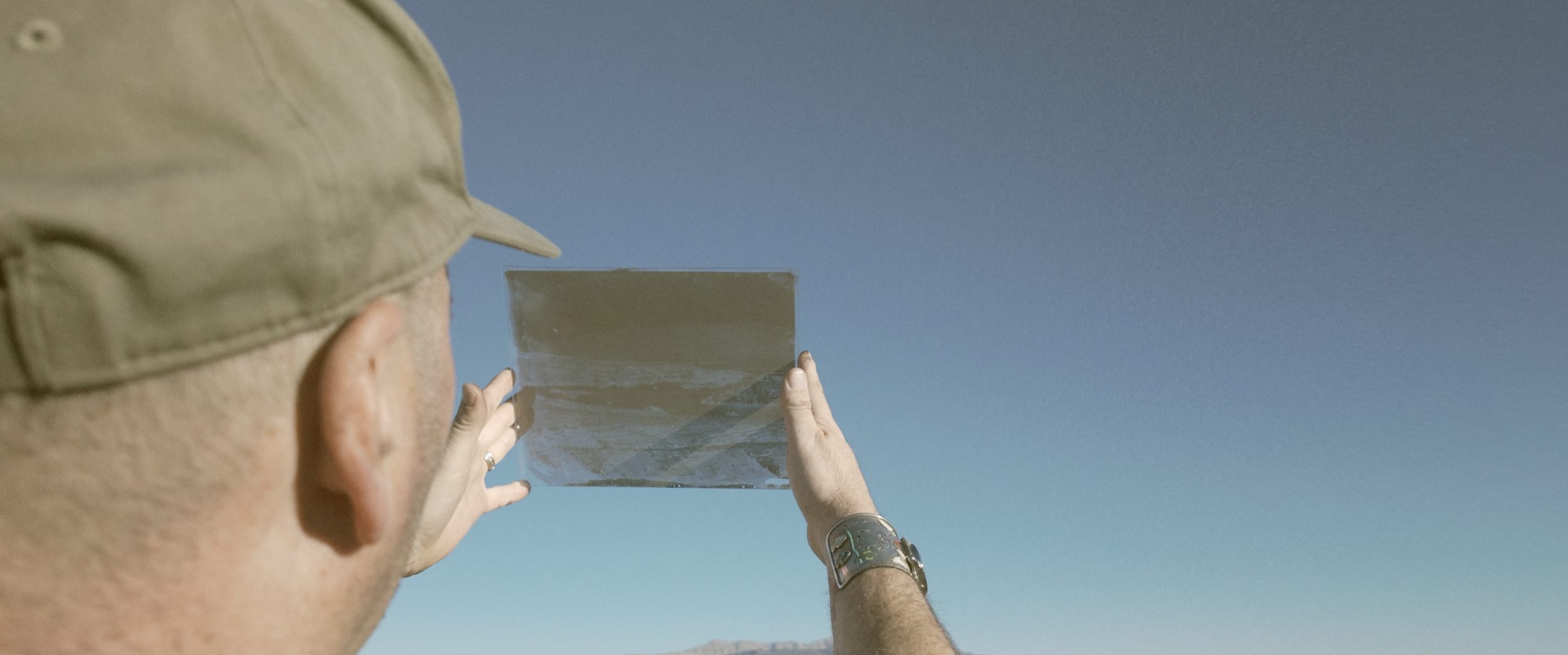
Examining Wet Plate Collodion glass plate negative
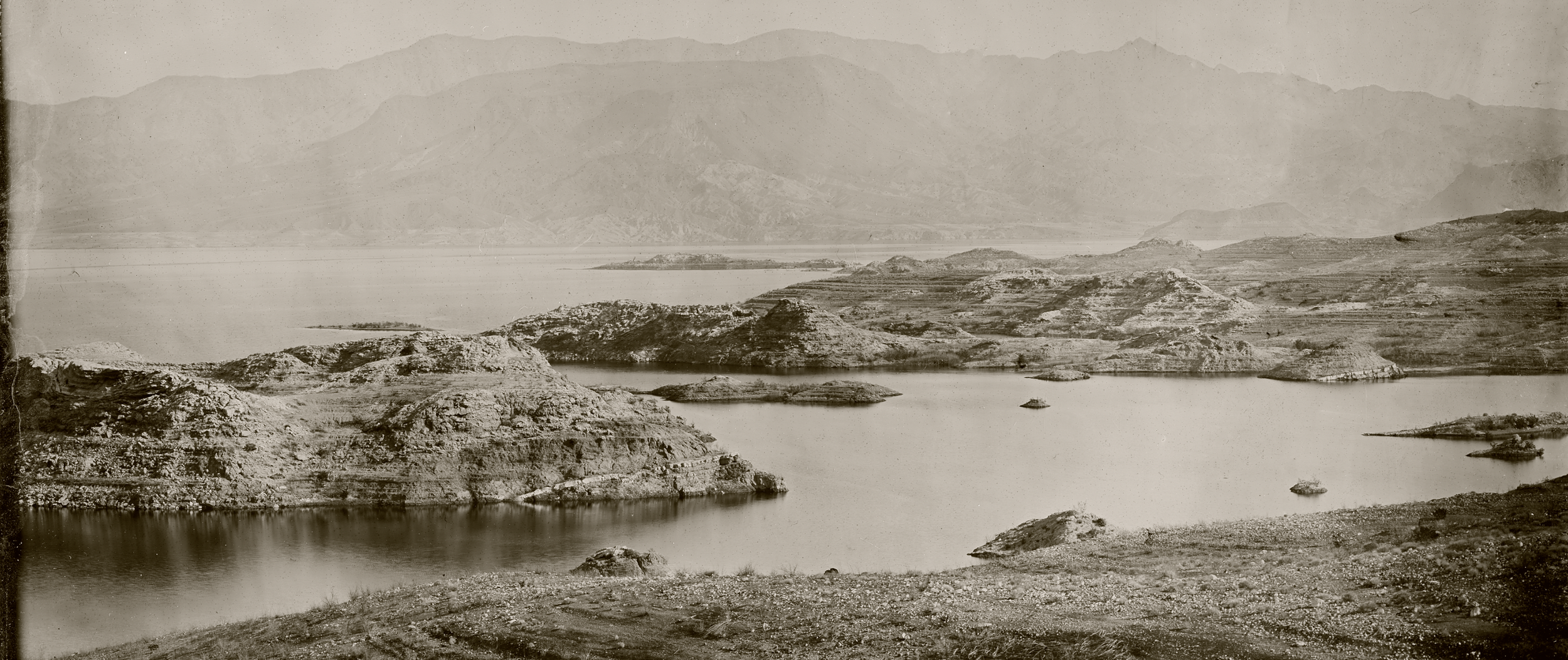
Lake Mead, Nevada Wet Plate Collodion Print by Daniel Leocadi
Technical Provenance
Location: Lake Mead, NV/AZ.
Media: 8x10 Glass plate & Black Trophy Aluminum plate with Wet Plate Collodion.
Chemistry: All aqueous solutions (Developer/Fixer) mixed on-site using filtered Lake Mead supply.
Focus: Documentary evidence of a man-altered landscape.
If you want to own a piece of this journey, the print from the film is available here:
