Painted Rocks — When the Cloud Fails
Nothing is forever. But some things get close.
Some places feel temporary the moment you arrive. Others feel as though they’ve been waiting—unchanged, patient, indifferent to time.
Painted Rocks Petroglyph Site in Arizona belongs to the latter.
This plate was made in silence, beneath a sky that couldn’t decide whether to open or close. Clouds drifted, light softened, then thinned. When the cloud finally failed, the rock remained—exactly as it has for centuries.
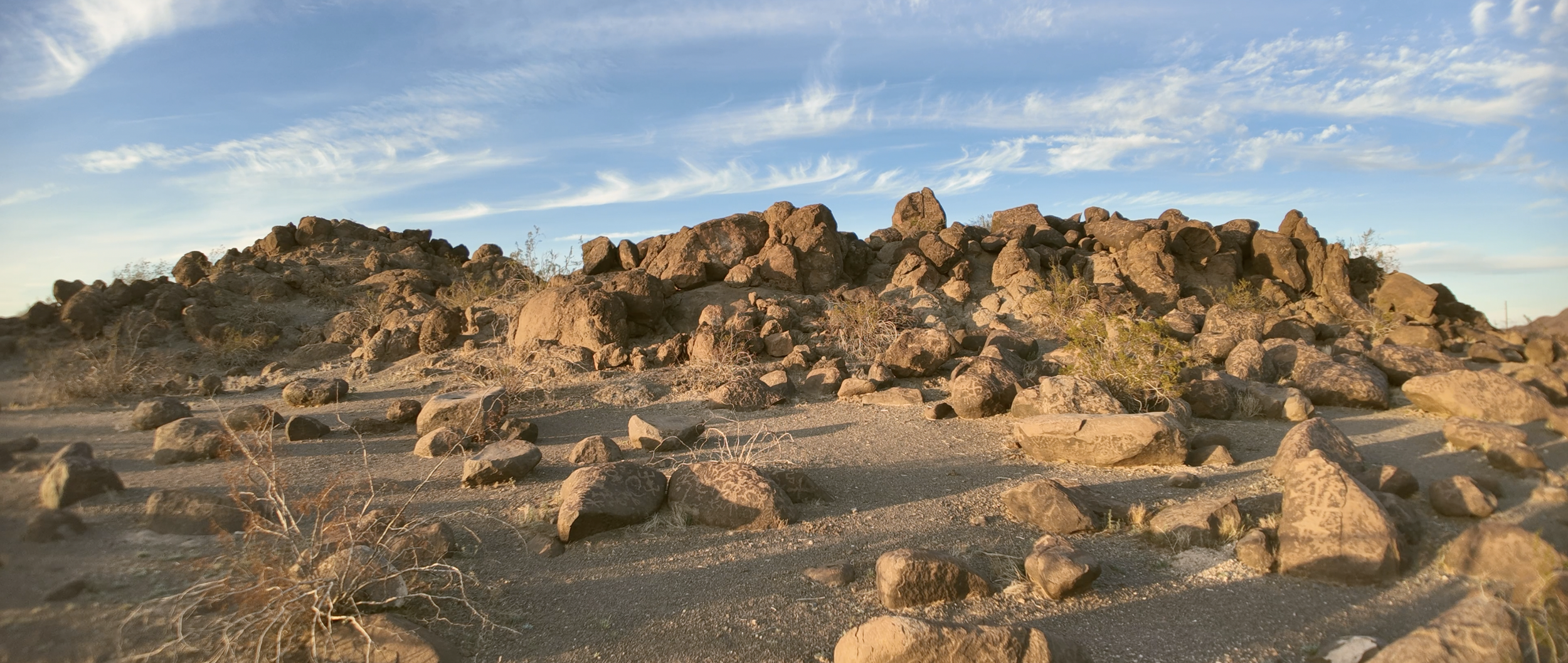
The Painted Rocks, Arizona, USA
The Subject: Rock That Remembers
The power of Painted Rock isn’t spectacle. There are no sweeping cliffs or dramatic elevation changes. Instead, the landscape is defined by endurance.
These volcanic stones are marked, weathered, and layered with meaning. Long before cameras or written language, people recorded their presence here by carving into stone—marks meant to last longer than memory itself.
Standing there with a camera built on 19th-century principles, it was impossible not to feel the continuity:
stone marking time
light passing briefly
an image formed once, never repeated
This place doesn’t demand attention. It simply outlasts it.
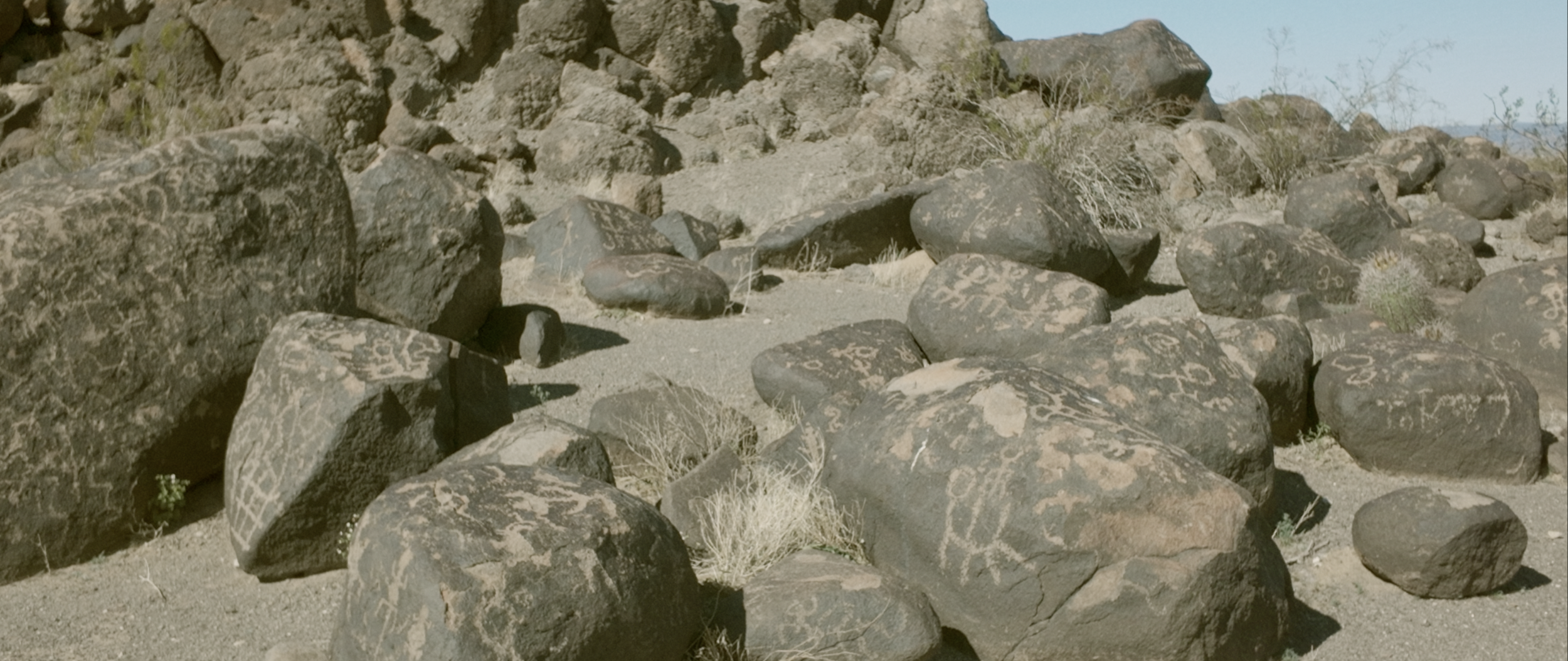
Ancient Petroglyphs on the Painted Rocks, Arizona, USA
Why Dry Plate Collodion Belongs Here?
This photograph was made using the dry plate collodion process, a transitional photographic method that sits between wet plate collodion and modern gelatin emulsions.
Unlike wet plate, the dry plate allows the surface to be:
coated in advance
dried and stored
exposed later in the field
developed after the fact
What it removes in urgency, it adds in intention.
Using dry plate here mattered. The process allowed time to study the rock, to wait for light, and to commit only when the composition felt resolved. Still, the plate remains a one-shot object—no previews, no safety net.
The result is an image shaped by patience rather than speed.
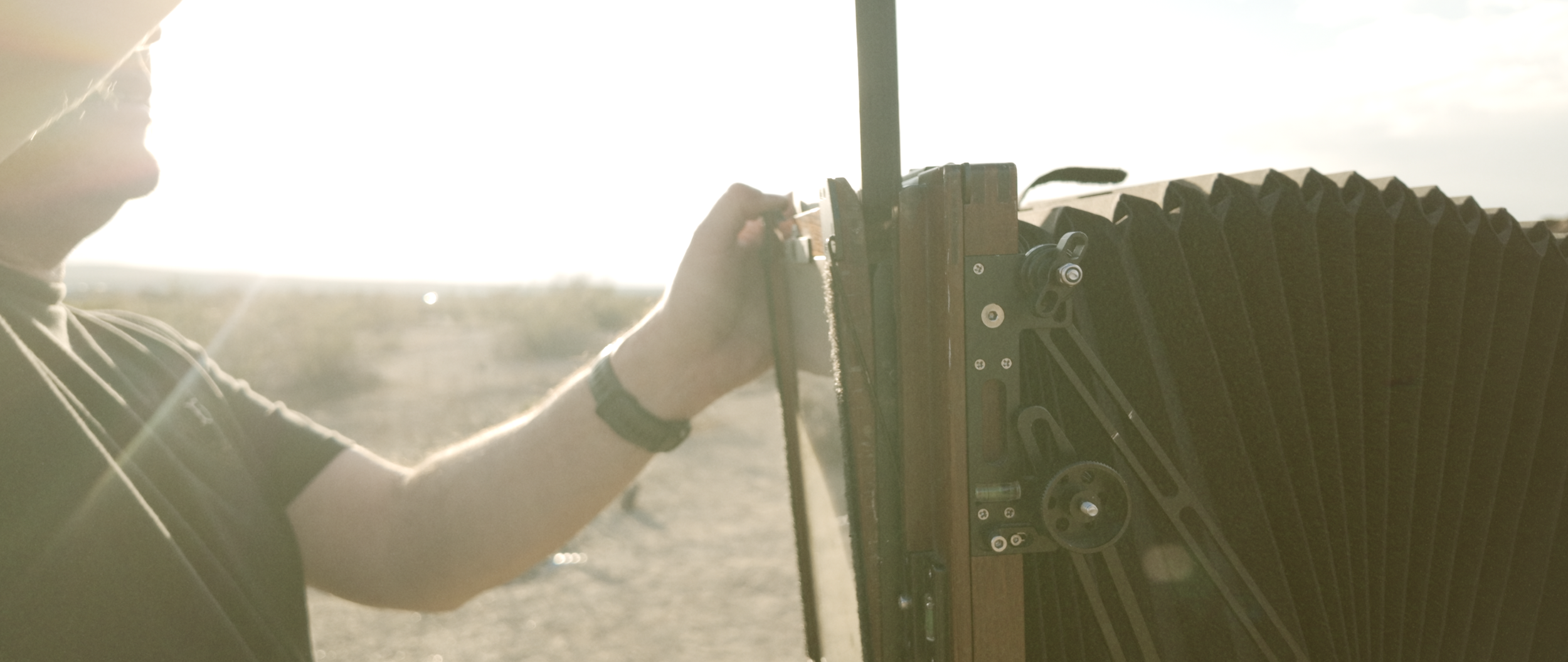
Out in the field photographing the Petroglyphs at the Painted Rocks using the dry plate collodion process - Gila Bend, Arizona, USA
Composition: Accepting What Cannot Be Sharp
One of the challenges at Painted Rocks is depth. The petroglyphs exist across multiple planes—stones angled differently, surfaces stepping forward and back.
It is not possible to bring every carving into perfect focus.
Rather than fight that limitation, the composition uses the upper stone as an anchor—a visual reference point that holds the frame together while allowing other surfaces to fall gently out of focus. The eye moves across the image the way it does in real life: scanning, settling, returning.
Sharpness becomes selective. Attention becomes intentional.
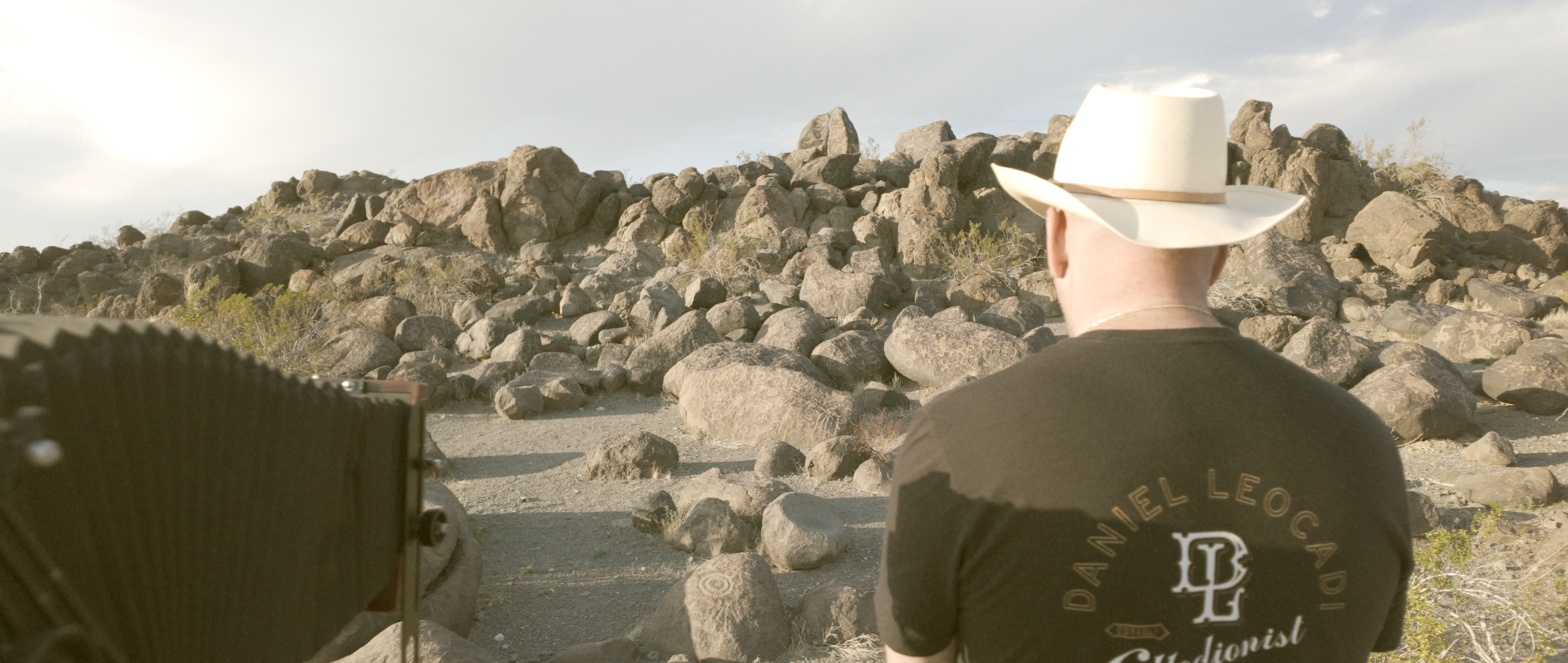
Focusing is challenging due to the various planes the petroglyphs find themselves
Rochester Stereo View Camera
Stereoscopic photography was one of the earliest ways to record a real scene in 3D—long before video, long before VR. It’s two near-identical photos made from a small offset, and when you view them together in a viewer, the depth shows up. It’s the closest I can get to bringing someone into this space.
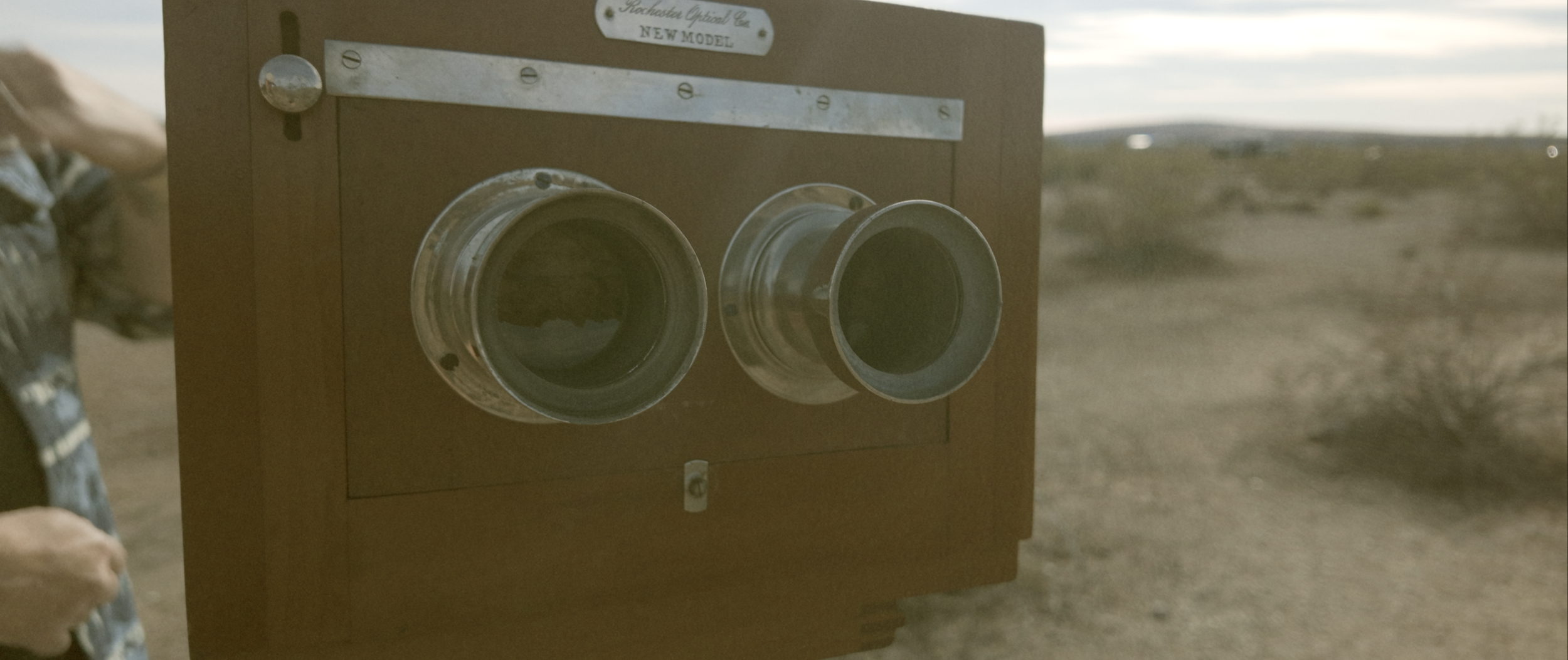
Rochester 5×8 Stereo Camera
Tone as Evidence of Time
The petroglyphs were carved at different times, and the color of the stone reflects that. Darkened marks sit beside lighter ones. Weathering, oxidation, and age all register visibly.
Dry plate collodion records these differences subtly but honestly. There is no exaggeration—only separation. The plate does not unify the surface. It allows the differences to remain.
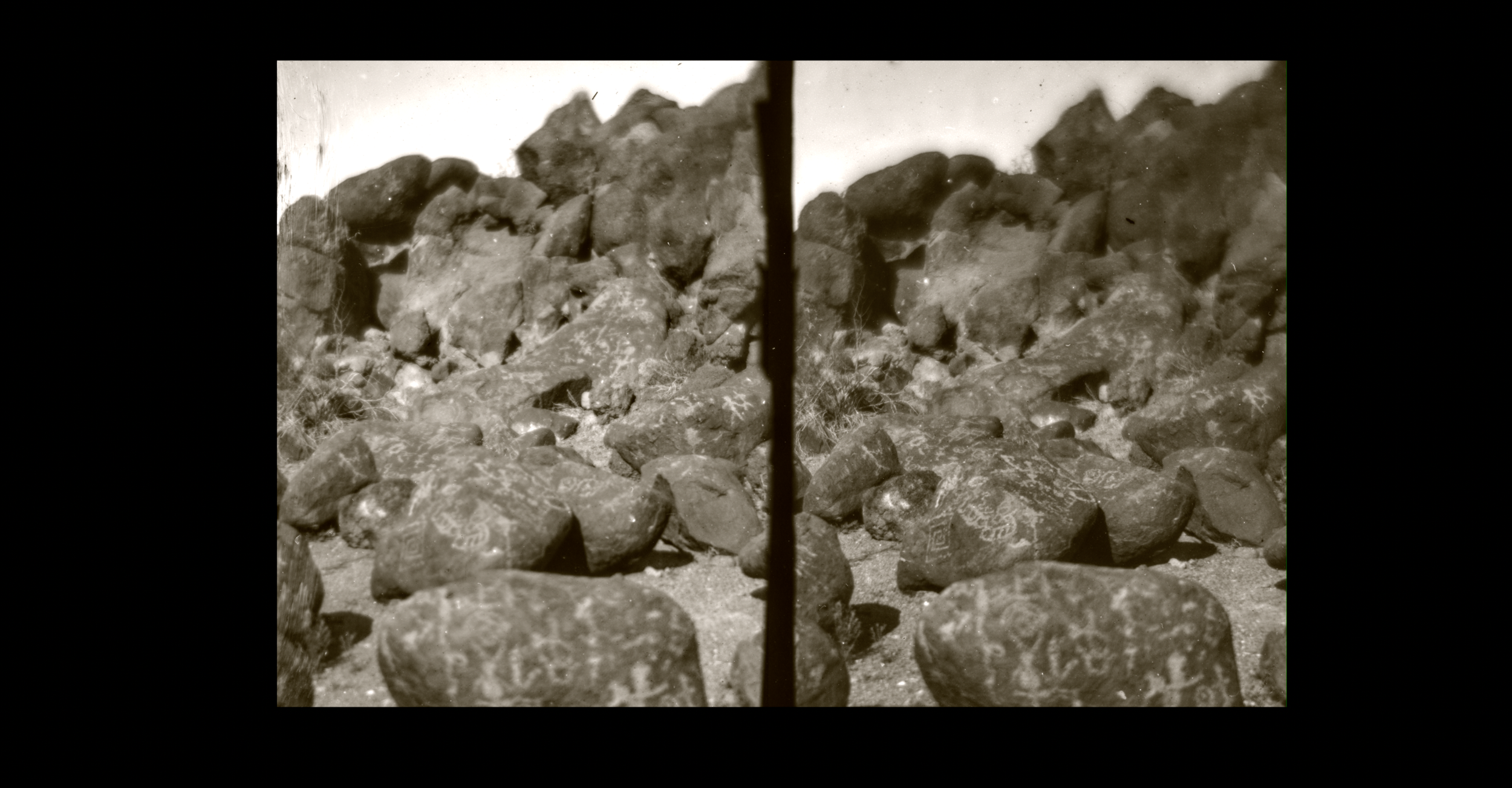
3D Stereo view of the Petroglyphs at the Painted Rocks in Arizona, USA
Field Conditions
Camera: 8×10 large format field camera, Rochester Stereo View camera
Process: Dry plate collodion
Plate: Hand-coated, prepared in advance
Exposure: Single committed exposure
Development: After returning from the field
Light was shaped by intermittent cloud cover. Wind and dust were present but manageable. The decisive factor was waiting—watching how the surface responded as contrast rose and fell.
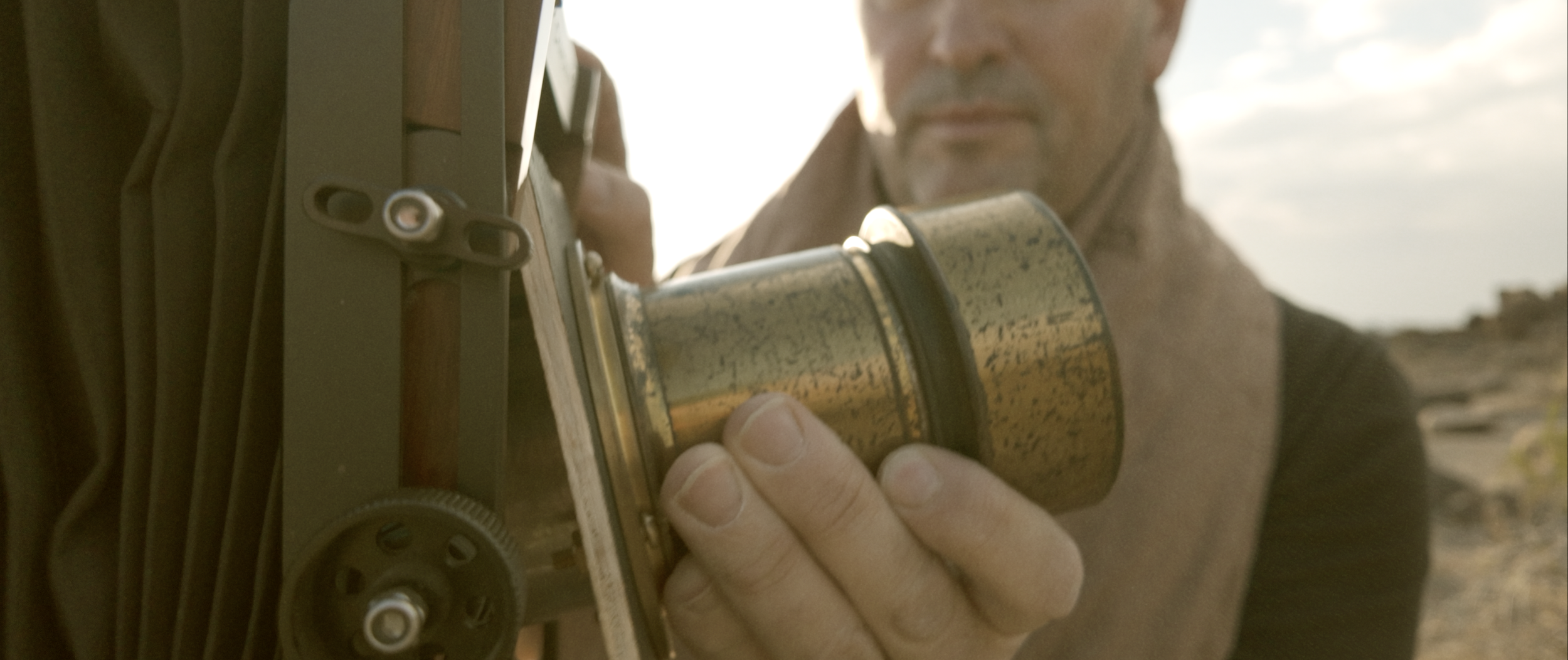
Fixing the lens to the camera
Why This Image Exists as a Print
Dry plate images are physical artifacts. Each plate carries slight variations in coating, tone, and surface character that cannot be duplicated.
This image was never meant to live only on a screen.
As a print, it becomes what the subject already is:
layered
patient
resistant to replacement
The object matters as much as the image.
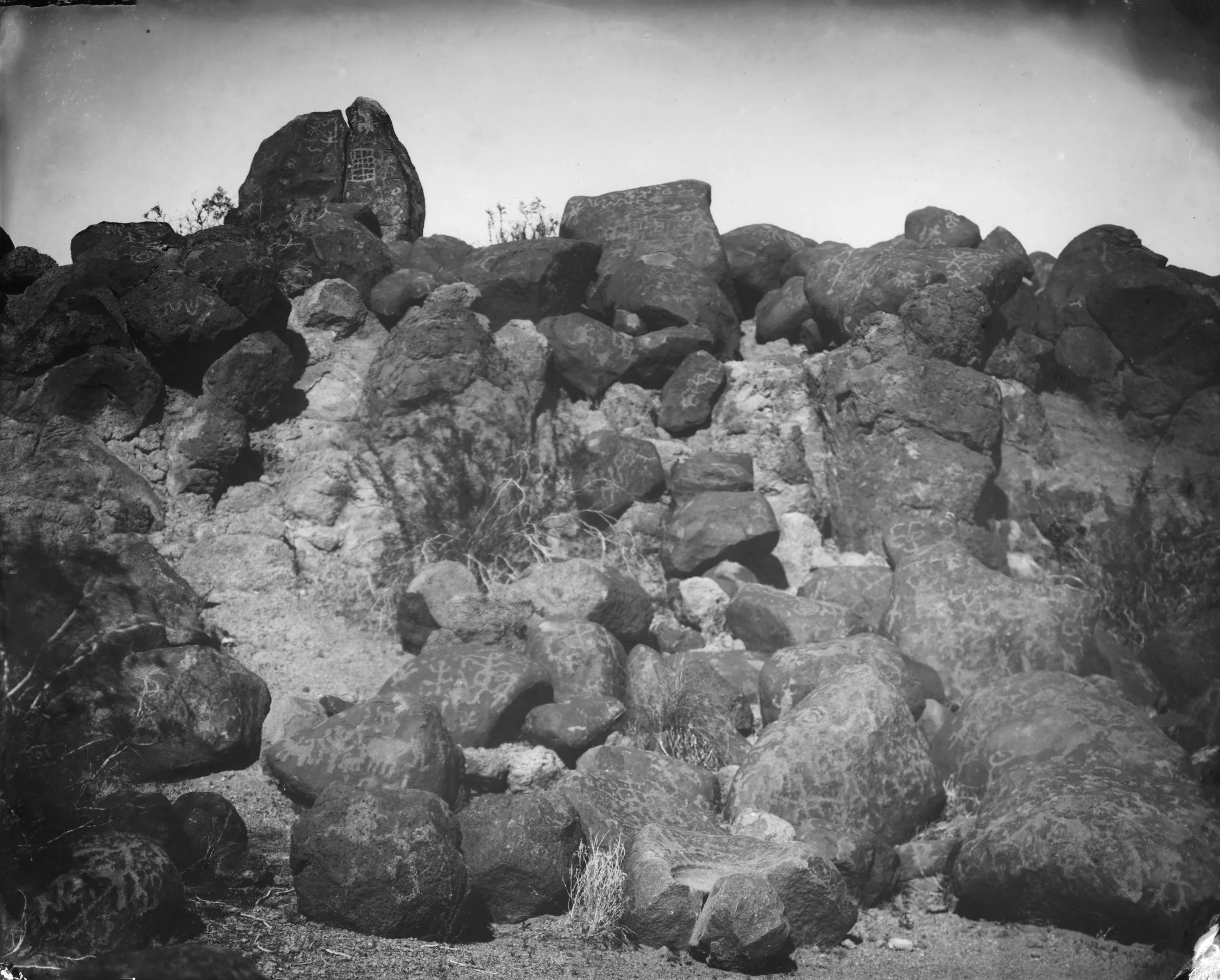
Painted Rocks Dry Plate Collodion Print by Daniel Leocadi
Closing Note
This plate exists at the intersection of process, place, and time—where a slow photographic method meets a surface that has already outlasted countless observers.
Nothing is forever - But some things get close.
Watch the Film: When the Cloud fails - What do we leave behind?
If you want to own a piece of this journey, the print from the film is available here:
